Stateless
Stateless documents the impact of gender-based nationality laws in Lebanon and Syria, where citizenship is inherited solely through the father under the legal principle of paternal jus sanguinis (“by right of blood”). Patriarchal laws prevent mothers from passing on nationality, leaving children of absent, deceased, imprisoned, or politically targeted fathers without legal recognition. Families face immense bureaucratic barriers, and generations grow up without identity, excluded from education, healthcare, and basic rights. Chiara approaches the subject with quiet attention and empathy, revealing how these laws shape daily life and perpetuate cycles of exclusion.
“This systemic discrimination has profound social consequences in both countries. They shape life, future and social and emotional belonging. Children born stateless face barriers in everyday life, from school enrollment to access to medical care and later to legal employment and the right to own property. Families struggle to navigate bureaucratic hurdles. Fathers who have returned from exile, prison, or no longer live in hiding often face immense difficulties registering their children retroactively. When fathers are stateless, absent, imprisoned, or deceased, mothers often have no legal means to secure nationality for their children. The result is a self-perpetuating system where statelessness becomes a condition passed down through generations, leaving families without recognition, rights, or protection under the law. Entire communities, like the Kurdish and Palestinian populations in Syria, or Palestinian and Syrian communities in Lebanon experience intergenerational statelessness.
The combination of political discrimination and patriarchal law demonstrates how the law sustains invisibility and marginalization in citizenship policies. Citizenship, a fundamental human right, is systematically denied, turning statelessness into a condition that defines the life of individuals across generations.” – Chiara Wettman
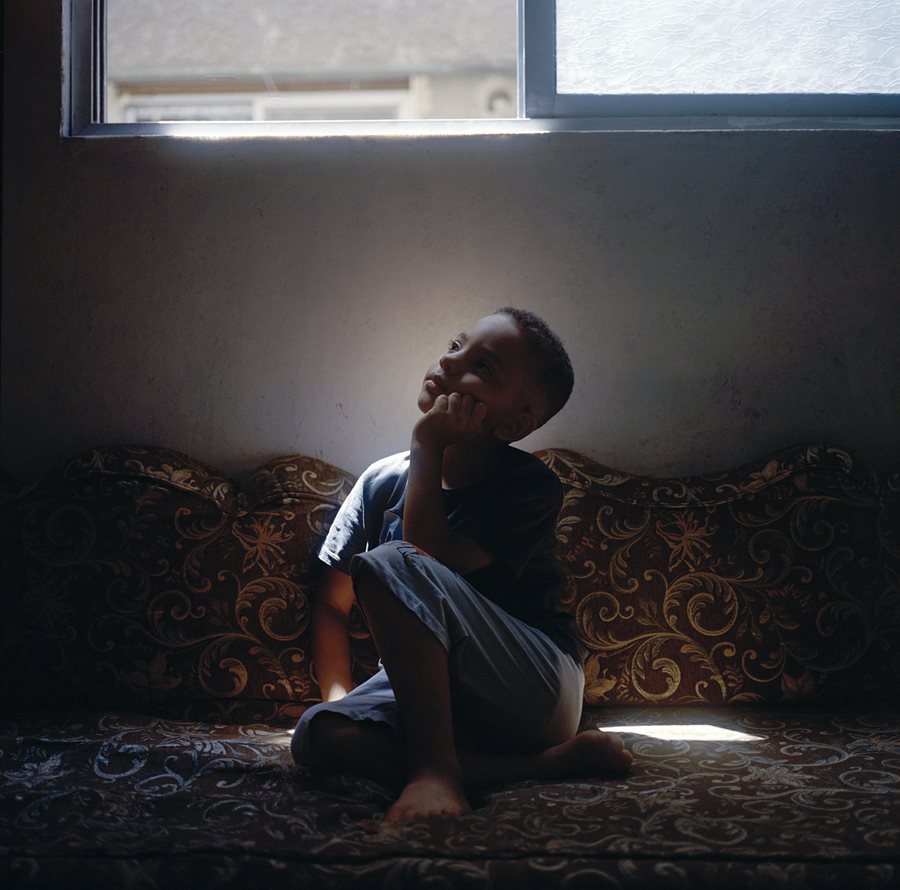
Omran (8) at his grandmother’s home. His mother gave birth to him in prison under the Assad regime; he was taken from her a week after birth. With his father killed in fighting and his mother unable to pass on her citizenship, Omran remains unregistered and barred from attending school as the new school year begins. Ain Tarma, Damascus, Syria, July 2025
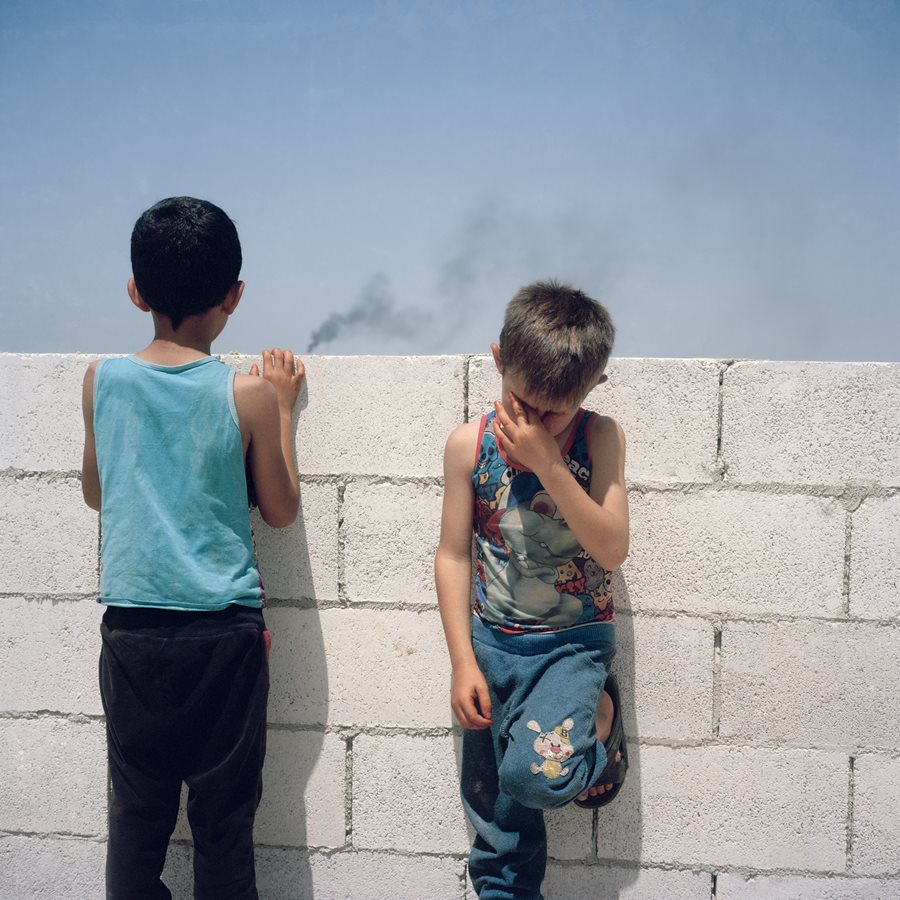
Brothers Mohammed Mokhtar (9) and Mustafa (8) watch the smoke rising from an oil refinery near their home. Baba Amr, Homs, Syria, August 2025
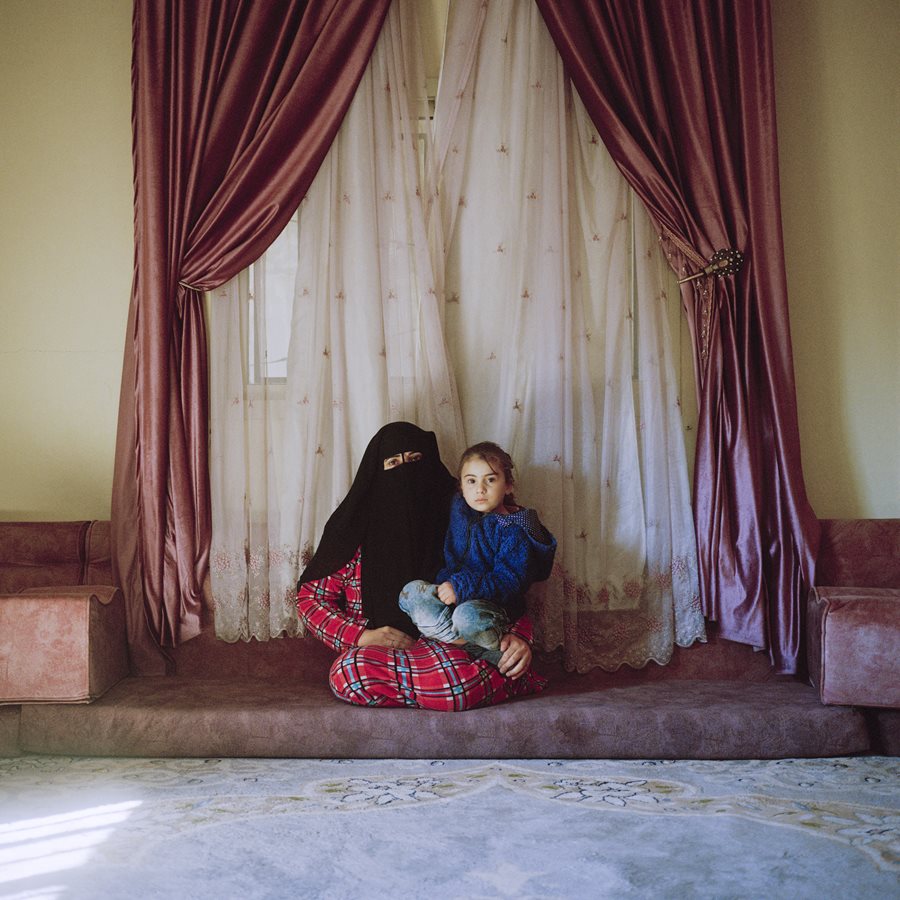
Nadia grew up stateless, as did her entire family. Her children were registered through their father. Nadia, on the other hand, was never to acquire citizenship through her husband. Now divorced, that possibility is gone entirely. Wadi Khaled, Lebanon, February 2025.
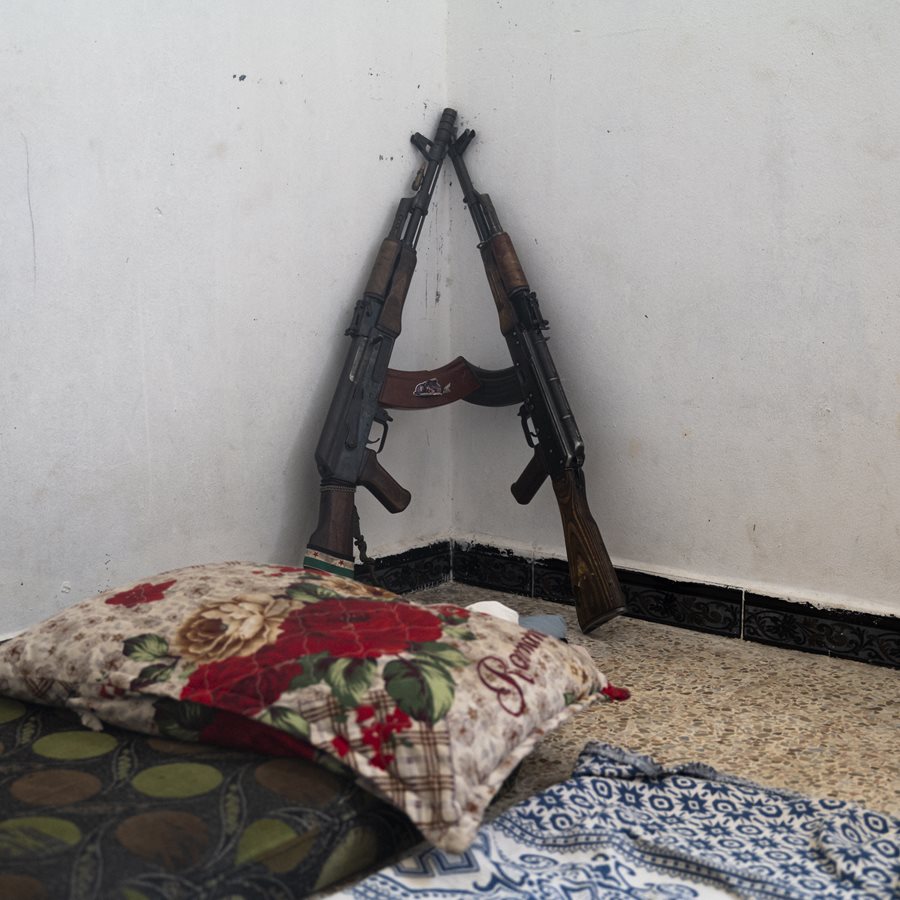
Two Kalashnikov rifles of Tayeb leaning against a wall inside the family home. He is still cautious about possible assaults. Homs, Syria, August 2025