I Will Return in Spring
“There was a time when the borders between Lebanon, Syria, and Palestine did not exist. Today, the memory of that time lies with those who remain close to the land – people who, despite war, exile, occupation, and dispossession, continue to sustain their communities through soil and season.” – Gabriel Ferneini
I Will Return in Spring follows the threads that reconnect places once held together – through the movement of people, the sharing of seeds, and the daily tending of land, life, and memory – showing that our histories, cultures, and forms of resistance were never confined by lines on a map.
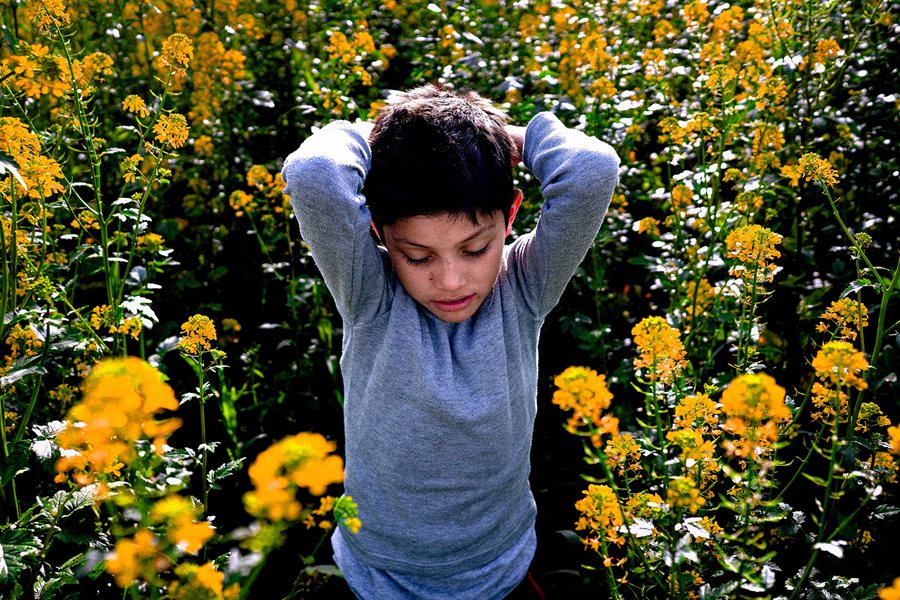
Hamoudi, the eldest son of Walid and Fodda, in a flower field on the Buzuruna Juzuruna farm. His family of Syrian farmers, originally from the Aleppo countryside, was living in Lebanon's Bekaa valley since the start of the war in Syria. They are among the founders of the farm and cooperative that works on preserving indigenous heirloom seeds. Saadnayel, Bekaa, Lebanon, March 2024.
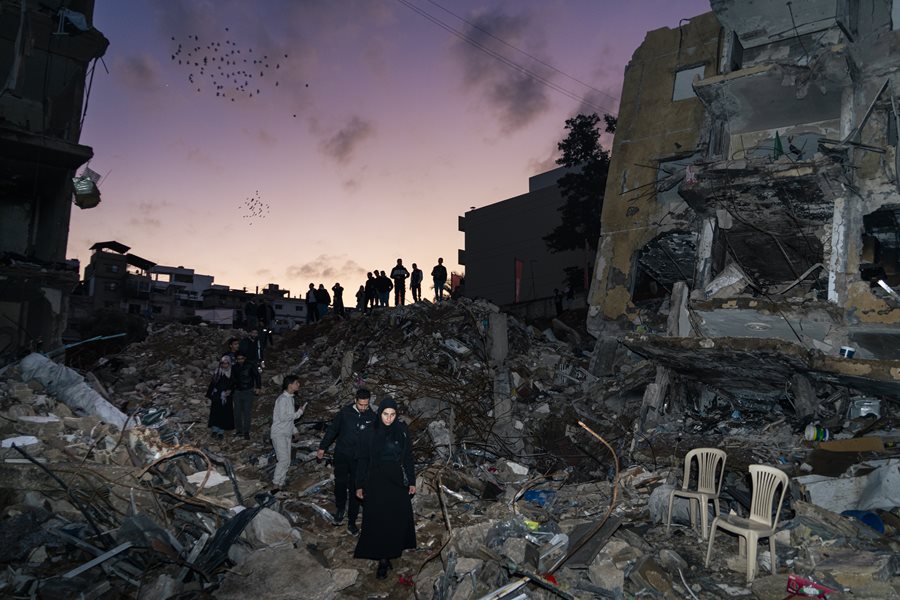
On 27 September 2024, Israel killed Hezbollah Secretary General Sayyed Hassan Nasrallah in a strike on Beirut’s densely populated southern suburbs, marking the peak of a military attack that would continue for two more months. After the ceasefire, the site became a place of mourning for many. Beirut, Lebanon, 5 December 2024
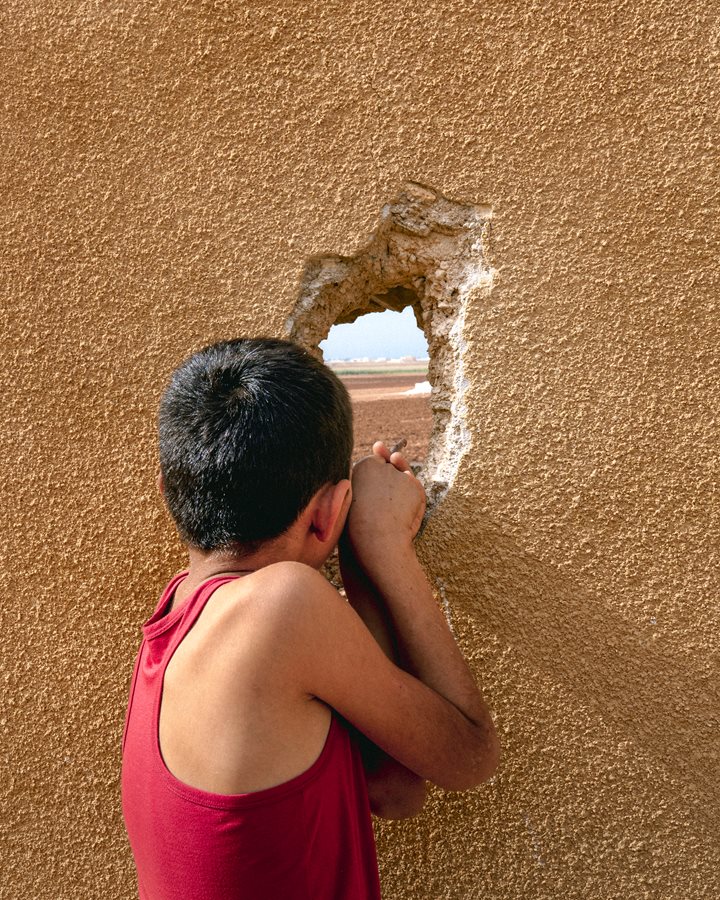
After returning to his home village in Syria, Hammoudi stands in his school and shows the hole that the Assad army once used as a sniping position when they were garrisoned there. Many Syrians displaced in neighboring countries are now returning after the fall of the Assad regime. While they are enthusiastic about rebuilding their country, many challenges remain. Rasm el Ward, Syria, October 2025
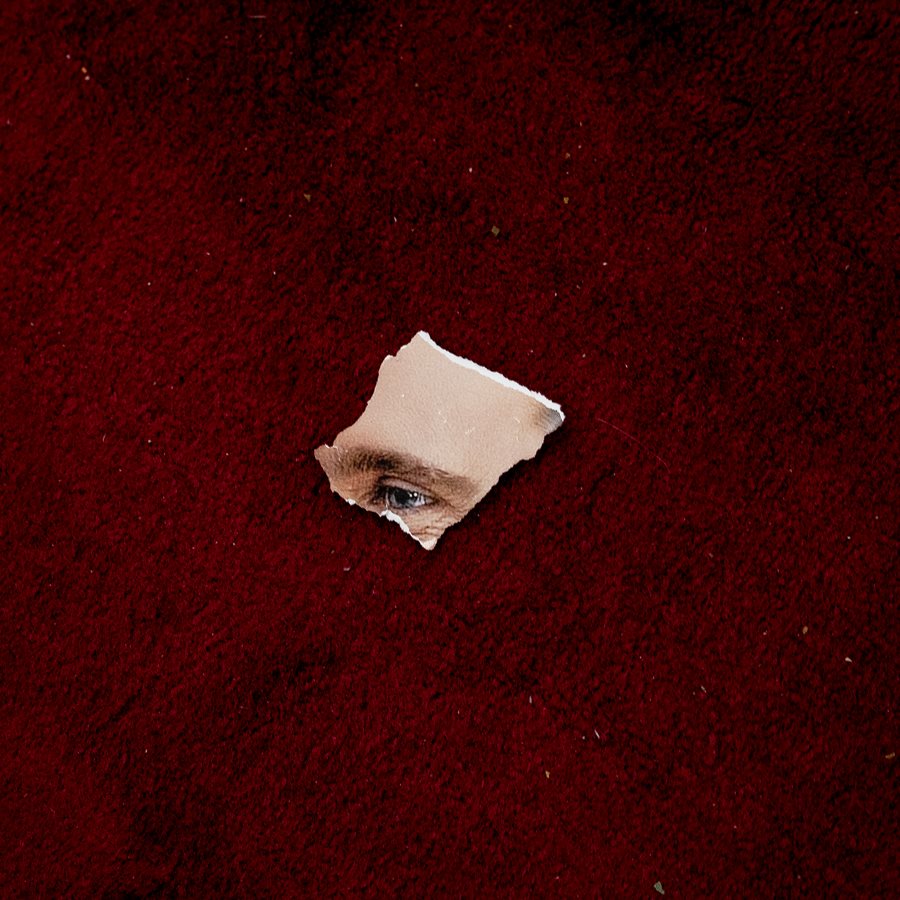
The eye of Bashar al-Assad is all that remains of a torn poster lying on the red carpet of the presidential palace in Damascus. Syria, December 2024