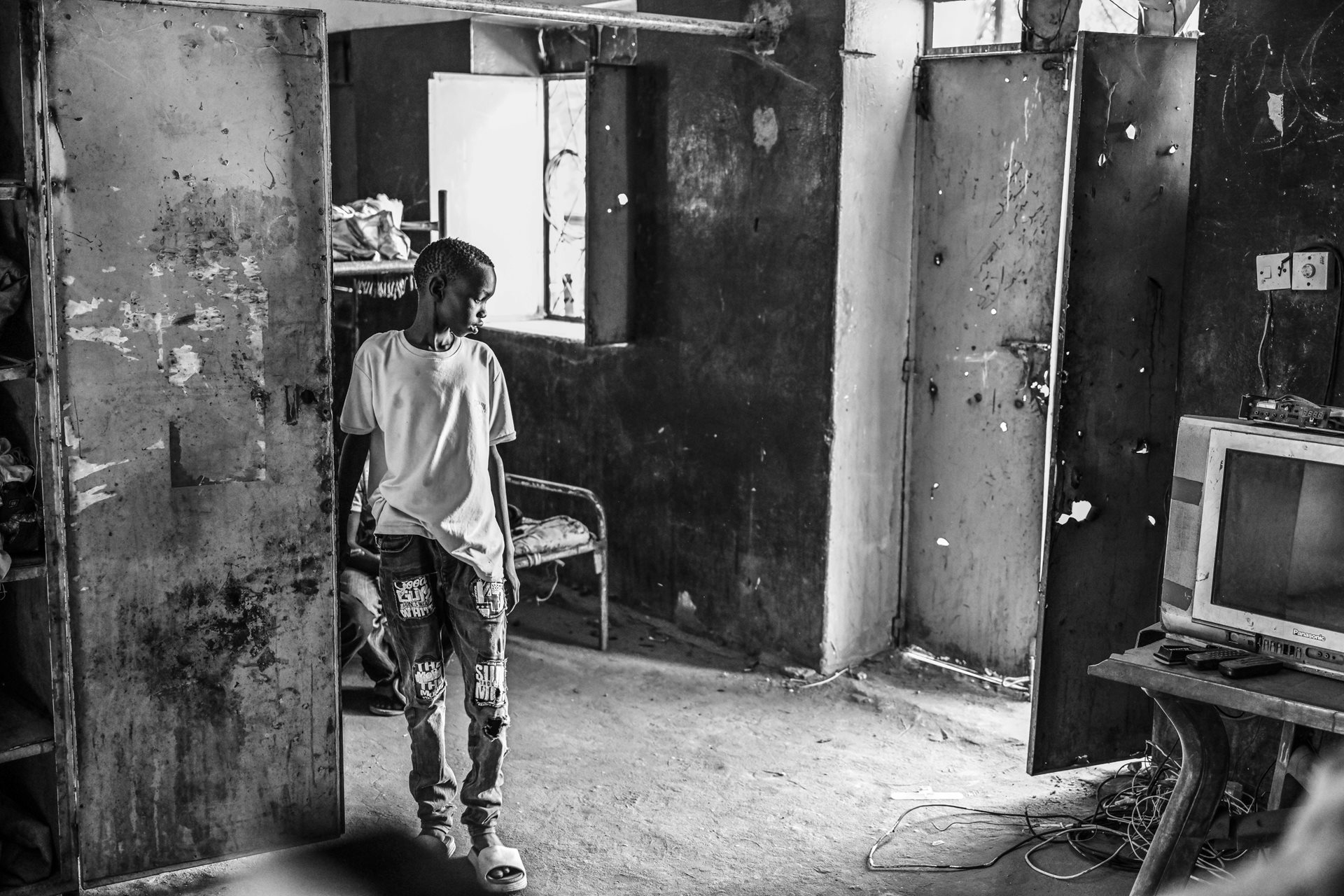


Haneen, whose parents were killed during the war, lives at the Al-Mahaba social center, which shelters orphaned children in Omdurman, Sudan.
Sudan has long faced internal strife rooted in ethnic, political, and economic tensions. For decades, the country endured the brutal dictatorship of Omar al-Bashir, who seized power in 1989. His regime oversaw the secession of South Sudan and the first conflict in Darfur, later condemned as genocide by the International Criminal Court.
When a 2019 uprising overthrew Bashir, Sudan's democratic hopes seemed within reach. In 2021, the army staged a coup, overthrowing the civilian-led transitional government and seizing power.
Two years later, the Sudanese Armed Forces (SAF) and the Rapid Support Forces (RSF) paramilitary group, turned on each other. War began in April 2023, and quickly spiraled into one of the world's worst humanitarian crises. The RSF has been accused of massacres, ethnic violence, and systematic looting. The SAF has bombarded cities it claims to defend. Both sides have attacked civilians and civilian infrastructure.
As famine spreads and essential services collapse, foreign military influence driven by strategic and economic interests continues to fuel the conflict. Over 13 million people have been displaced, and at least 150,000 killed. The UN reports that civilian killings more than doubled in 2025 compared with the previous year. Eight million children are out of school, and access to water, electricity, and medical care has largely disappeared. Humanitarian access is restricted in many areas.
What began as a popular uprising for democracy and civilian rule has ended in a brutal war between military powers, neither of which represents the aspirations of the Sudanese people. The war has also destabilized Sudan's neighbors, reportedly increasing violence and insecurity in border regions of countries already facing internal conflict, hunger, and disease.
Press freedom in Sudan has been severely restricted. Since April 2023, more than 400 journalists have fled the country. Those who remain face arrest, intimidation, and violence, while independent media outlets struggle to operate. Both the SAF and the RSF are running coordinated media campaigns designed to manipulate domestic and international audiences, spreading misleading statements and doctored images through social media and traditional channels.
In a time when independent photojournalism is increasingly vulnerable, donations from people like you give us the ability to work globally with photographers who believe in the power of photography to inspire change. Support World Press Photo today.