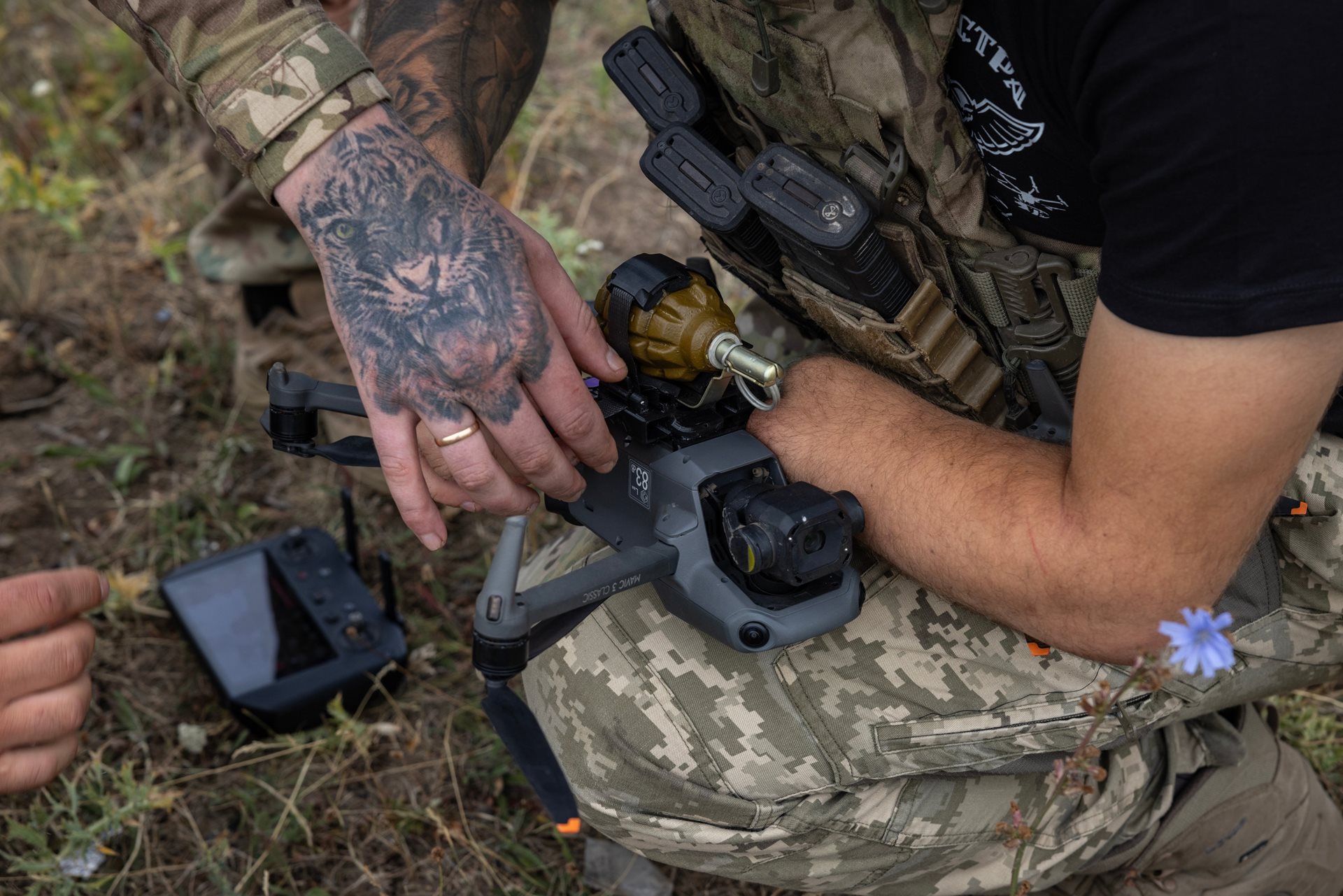


A Ukrainian soldier, known by the call sign “Ara,” uses his partially amputated arm to steady a drone being fitted with a grenade in the Donetsk region of Ukraine. Wounded in 2022, he now trains recruits in drone operations.
When Russia launched its full-scale invasion of Ukraine in early 2022, artillery, missiles, tanks and trench warfare dominated the battlefield. Ukrainian forces faced a vastly larger and more mechanized military. Their survival depended on improvisation, shaping one of the most significant shifts in modern warfare: the rise of drone combat.
Hobby drones are being repurposed into remote-controlled weapons, and mass-produced first-person-view (FPV) drones are piloted from kilometers away with deadly precision. The result is an unrelenting drone arms race with Russia and Ukraine now manufacturing millions of drones per year. The technology is already being replicated in conflicts worldwide.
Vast areas of Ukraine have been turned into “kill zones” where civilians are targeted, displaced, and often trapped. Soldiers spend most of their time in underground bunkers or basements, unable to be resupplied or casualty-evacuated. The rapid advancement of drone technology is outpacing international legal frameworks, raising profound questions about accountability, oversight, and the protection of civilian life.
This story documents Ukraine’s efforts to advance its drone capabilities, and the impact of Russian drone attacks on civilians and soldiers.
Behind every powerful image is a story someone chose to tell. And often, a risk someone chose to take. Support World Press Photo by making a donation to ensure these important stories are seen across the globe.