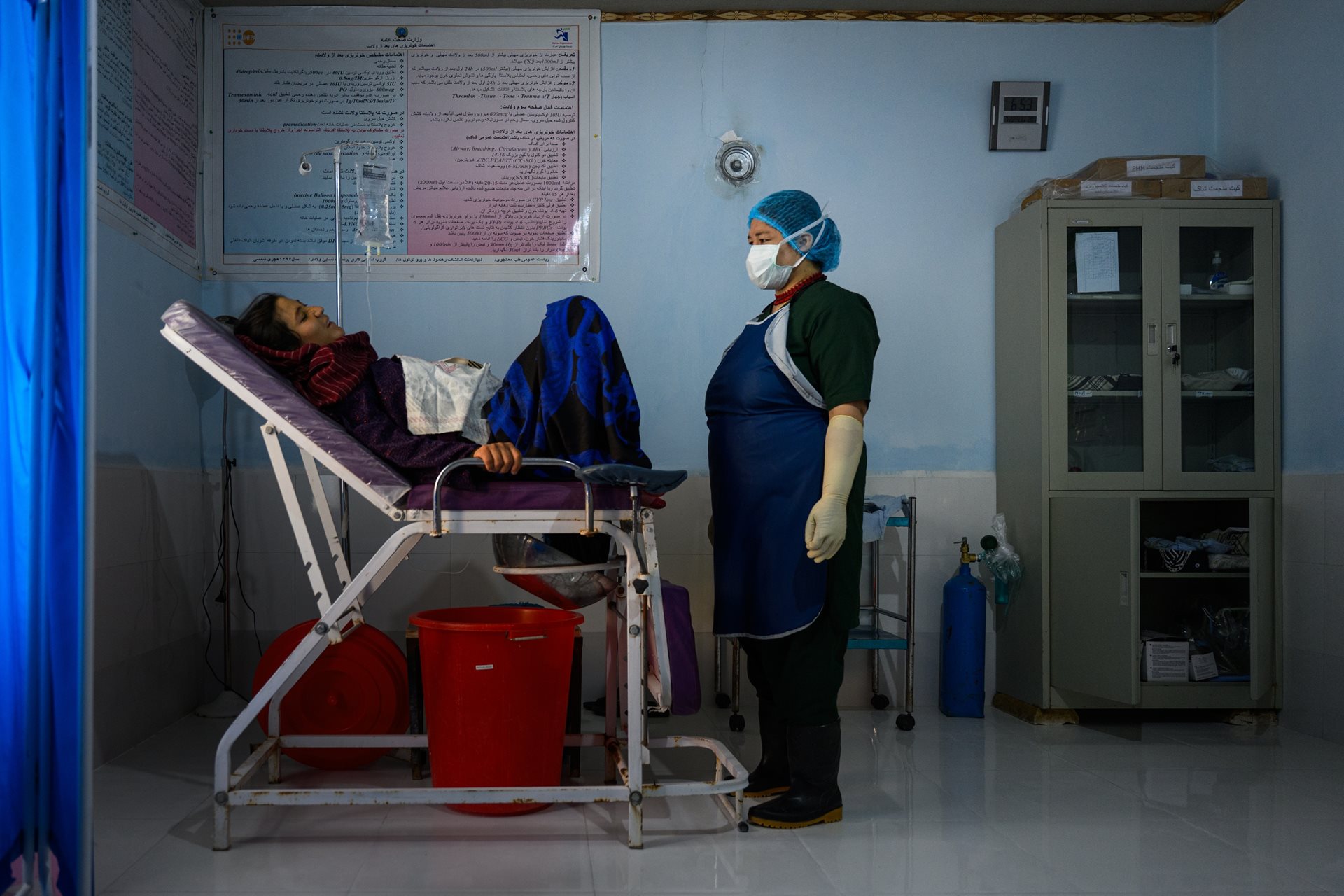


Atifa assists in what she says will be her last delivery, having run out of medication and the means to continue, at the Malmastok Family Health House. Shahristan district, Daikundi province, Afghanistan.
On 20 January 2025 – the first day of his second term – President Donald Trump signed an executive order freezing nearly all US foreign aid, leading to the suspension or closure of 422 health facilities in Afghanistan.
The country’s healthcare system was already under strain. In the mid-2010s there were around 3,000 health centers nationwide. When the Taliban returned to power in 2021, the number of functioning facilities halved to around 1,500 within three years, as most external funding was withdrawn. Humanitarian organisations adapted to sustain services, particularly for women and girls, but funding never recovered to pre-2021 levels. With 85% of healthcare costs met by external donors, and US aid historically the largest contributor, the system depended on continued international support to function.
In the remote province of Daikundi, pregnant women lost access to local midwives, their only source of care in communities hours from the nearest hospital and isolated by snow for months every year. Many were left with no choice but to give birth at home, in a country with one of the world’s highest maternal mortality rates. At some clinics, midwives continued working without salary or supplies, unable to abandon the women they cared for.
This crisis compounds an already critical situation. Shortly after returning to power, the Taliban banned girls from studying beyond primary school; women were subsequently barred from universities, and a December 2024 decree extended these restrictions specifically to medical education, preventing a new generation from training as health workers at a time of urgent need.
In a time when independent photojournalism is increasingly vulnerable, donations from people like you give us the ability to work globally with photographers who believe in the power of photography to inspire change. Support World Press Photo today.