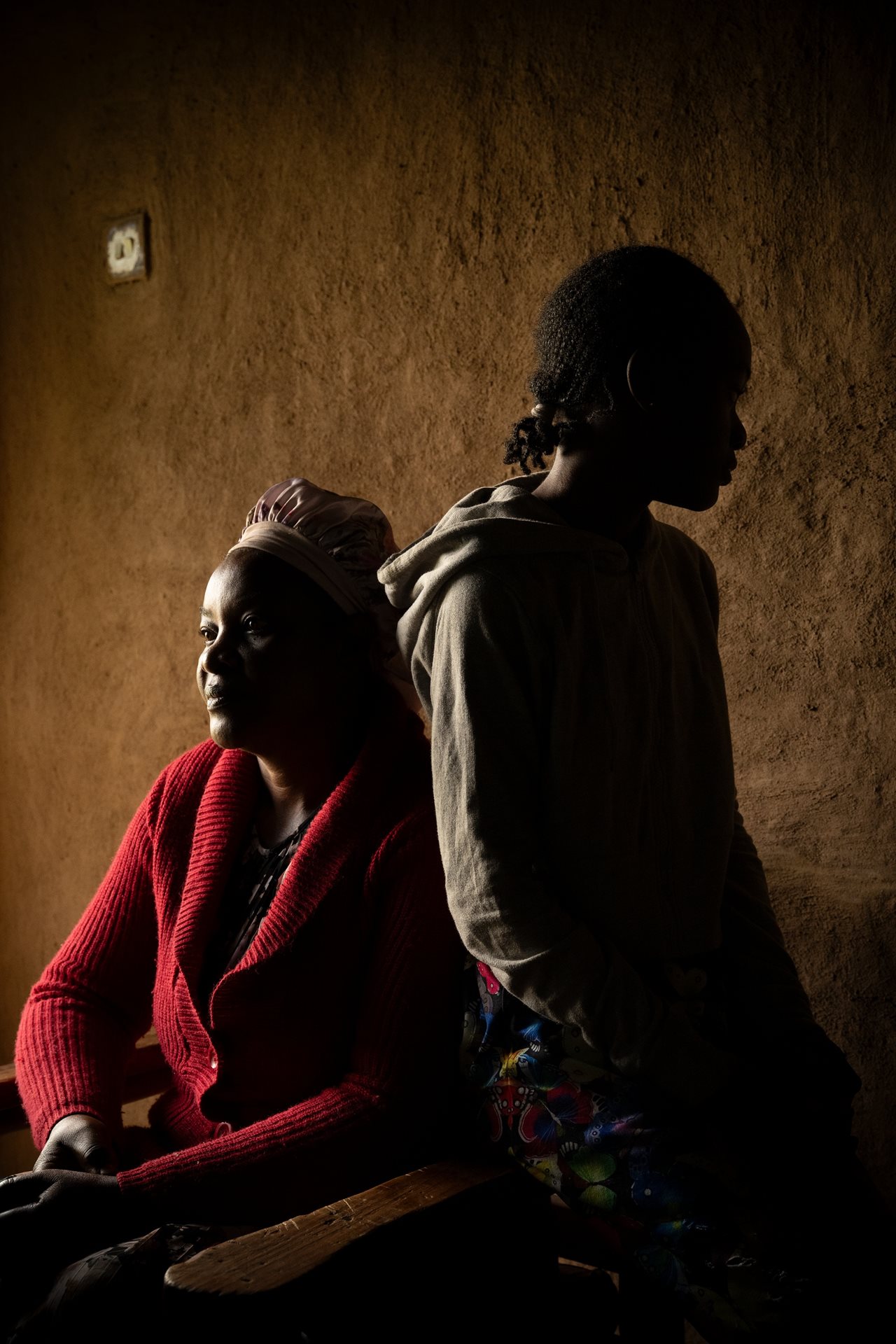


Edith Magomere Ingasiani and her daughter Blessings Iminza (9), at their home in Vihiga County, Kenya. Blessings was born in Saudi Arabia without a birth certificate.
Tens of thousands of Kenyan women migrate to Saudi Arabia for domestic work, where many endure abusive conditions, including passport confiscation and withheld wages. Edith Magomere Ingasiani was among them when she hid her pregnancy; unmarried women who give birth risk arrest under Saudi Arabia's laws against extramarital sex. She delivered her daughter Blessings alone in January 2016.
For years, Edith raised Blessings in the shadows while supporting her other children in Kenya. Saudi Arabia provides no process for unmarried mothers to obtain birth certificates or exit visas for their children, leaving Blessings unable to attend school or leave the country. Edith tried to return home with her daughter but faced bureaucratic obstacles from officials in both Kenya and Saudi Arabia. Kenyan officials have been documented insulting women seeking help, turning them away, and overwhelming them with endless paperwork. After years of navigating this, Edith and Blessingsthey finally made it back to Kenya in 2024. “"Home is always the answer,”" Edith says. “"It took eight years to get there.”"
The recruitment of domestic workers from Kenya to Saudi Arabia is a large, formal, government-approved industry. Women are recruited by licensed agencies and sent abroad through processes regulated by Kenyan and Saudi authorities. Many are misled about wages and working conditions, and made to sign contracts they cannot read. This system of deception, coercion, and control operates with the knowledge of officials in both countries, while domestic workers remain excluded from Saudi Arabia's labor law protections. At least 274 Kenyan workers have died in Saudi Arabia in the past five years.
At no time is the need for accurate information more essential, while at the same time, more difficult to produce. That’s why we all need to support a free press. Make a donation to World Press Photo today to strengthen photojournalism.