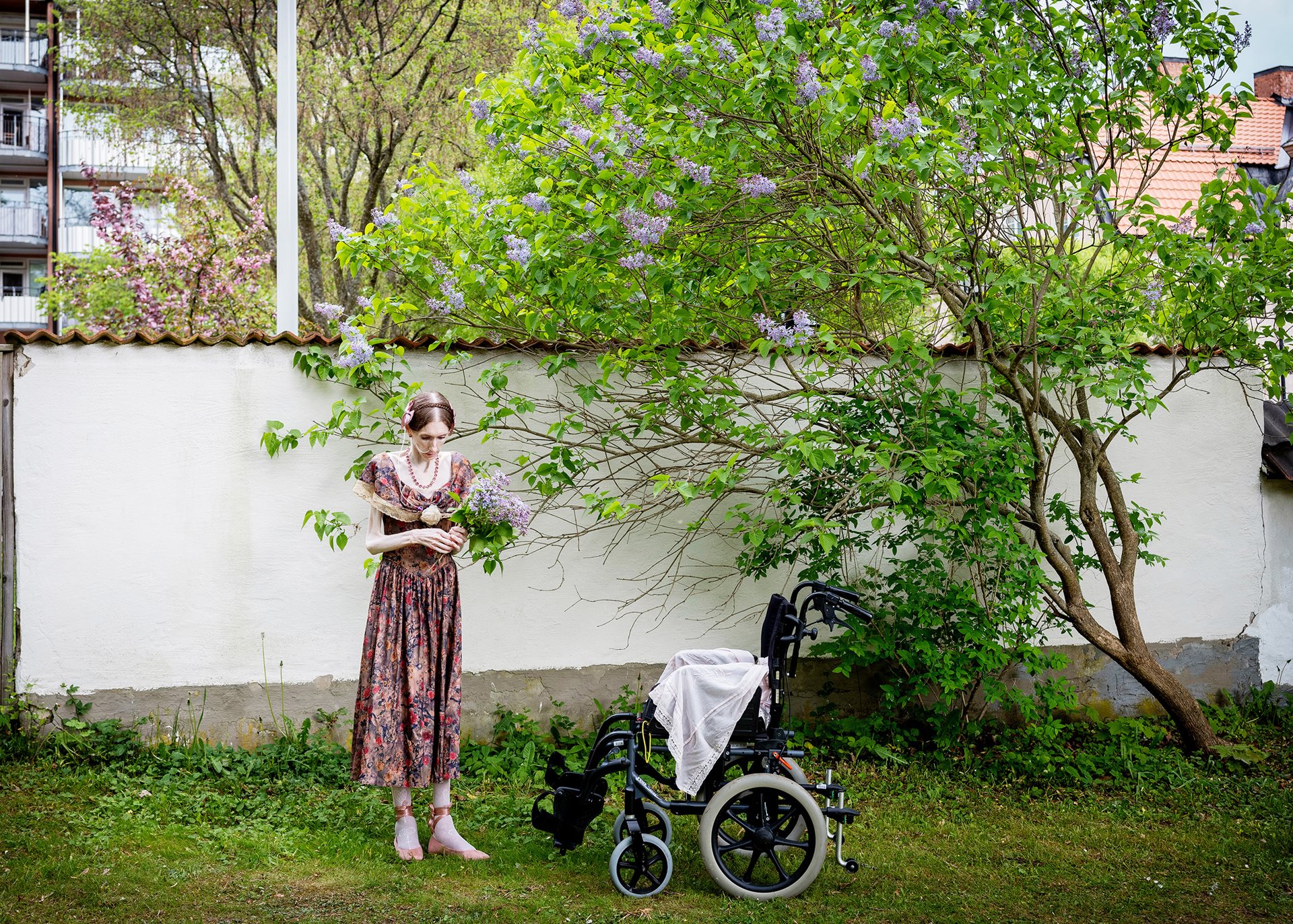


Engla Louise gathers lilacs from the Linköping Garden Society park beside her home in Linköping, Sweden. Being surrounded by beauty is important to her.
Engla Louise, a former dancer, has lived with severe anorexia nervosa since she was ten years old. In 2025, at 46, she weighed less than 25 kilograms and had been tube-fed for seven years.
Researchers increasingly describe anorexia as a disease of both body and mind. Its causes – not fully understood – are thought to involve neurobiological, genetic, and environmental factors. The condition remains widely misunderstood, often reduced to a matter of choice or control. Engla Louise was not diagnosed until four years after her illness began, when she was urgently admitted to hospital as a teenager. Over the following three decades she received various forms of treatment, including periods of compulsory hospitalization. She is now considered therapy-resistant and receives palliative care at home. Ballet, elaborate clothing, and the beauty of nature are central to her daily life – a carefully constructed world that speaks to who she is beyond her illness.
Engla Louise has since transitioned to five small meals a day, though her condition remains very fragile. She is often bedridden and requires extensive daily support. Her care is provided through Sweden’s public psychiatric healthcare system alongside separate municipal welfare services, though her family says the arrangement is inadequate given the extent of her needs.
Built on nearly two decades of trust between photographer and subject, this project aims to broaden the discussion about care for people living with severe, long-term eating disorders.
At no time is the need for accurate information more essential, while at the same time, more difficult to produce. That’s why we all need to support a free press. Make a donation to World Press Photo today to strengthen photojournalism.