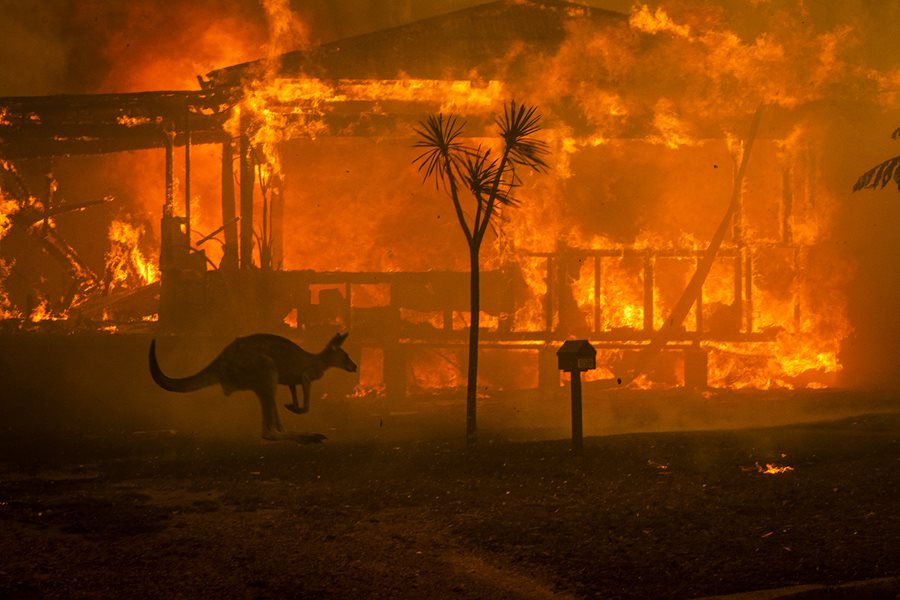
Humans are changing the climate, while struggling to resist and adapt to change. As human industry emits carbon dioxide (CO₂), methane, and other heat-trapping greenhouse gases into the atmosphere, we are warming the Earth and intensifying extreme weather. Climate change is sweeping across borders, affecting health, safety, livelihoods, and the ability to grow food. It also contributes to migration and conflict. Responsibility for global warming is not shared equally, however; those least responsible are often the most affected.
On the one hand, the exhibition highlights the role of photojournalists in rendering the crisis visible, documenting traces of global warming from around the Earth and creating awareness of its impact – often at considerable risk. On the other hand, confronting a crisis of this scale also calls for glimpses of hope, driven by research and action efforts of revival, repair, and resistance. Seeing how others are resisting climate change and reshaping their worlds can inspire us to action, grounded on a constellation of practices and a collective mission.
The exhibition also sheds light on the role of photojournalists and reporters in bringing back stories from places where land, water, and lives are under pressure, making visible what is too often hidden or denied. Yet the work of environmental reporting has become increasingly dangerous. According to UNESCO’s 2024 Press and Planet in Danger report, 70% of journalists covering environmental topics have been targeted or attacked for their work. Becoming Climate stresses the urgent need to safeguard press freedom as a necessary condition for environmental reporting, further reminding us that protecting the planet and protecting the press are deeply connected – both are essential to shaping a livable future.
Presented here is a selection of the stories and photographs from the exhibition. What photographs resonate with you, and why? Share your thoughts on social media using the hashtag #BecomingClimate.
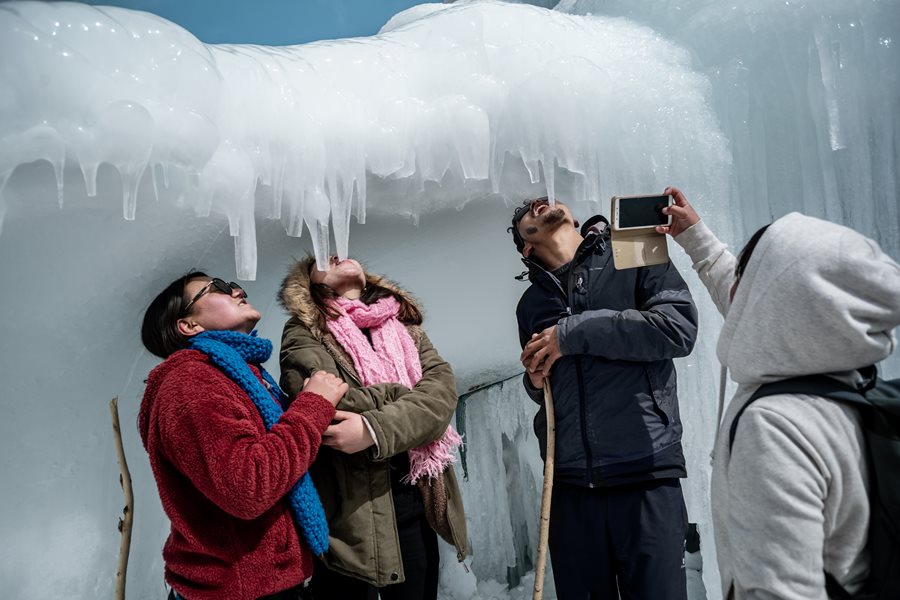
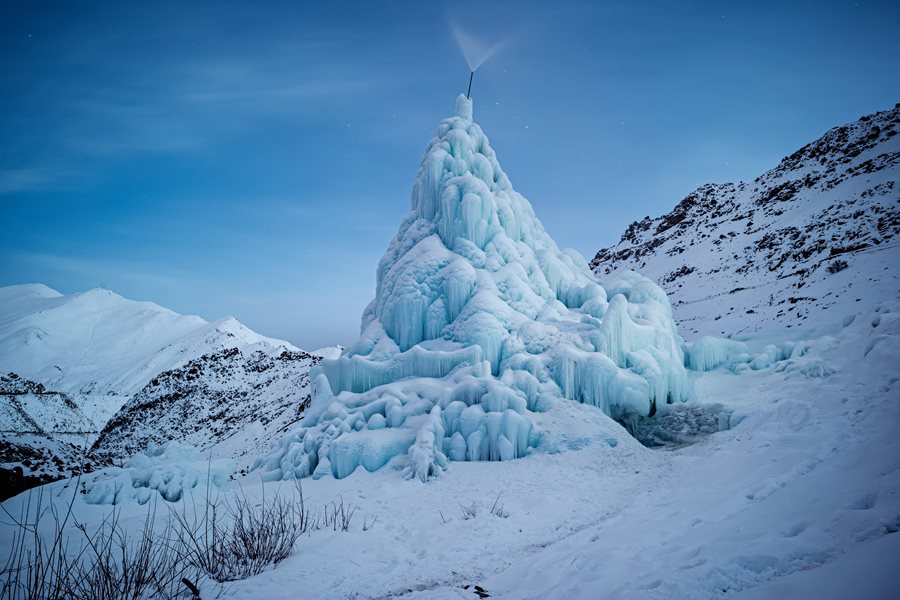
One Way to Fight Climate Change: Make Your Own Glaciers by Ciril Jazbec
Left: Visitors and members of the local community enjoy the ice at the Shara Phuktsey stupa in Ladakh, on 22 March 2019. Right: Water spouts from the delivery pipe to form the 24-meter-high stupa in Gangles, near the regional capital, Leh, in Ladakh, on 16 March 2019. © Ciril Jazbec
As Himalayan glaciers recede, communities in the region of Ladakh, India, face water shortages. In 2013, Sonam Wangchuk, a Ladakhi engineer and innovator, invented stupa-like ice cones to store water in winter for the growing season in spring. They are made by piping water from higher elevations and spraying it into subzero air, where it freezes into towering formations. Wangchuk emphasizes the need to continue addressing climate change by reducing emissions. In October 2024, he completed a 15-day fast advocating for Ladakh's inclusion in the Sixth Schedule of the Indian Constitution that aims to protect tribal populations and their environment.
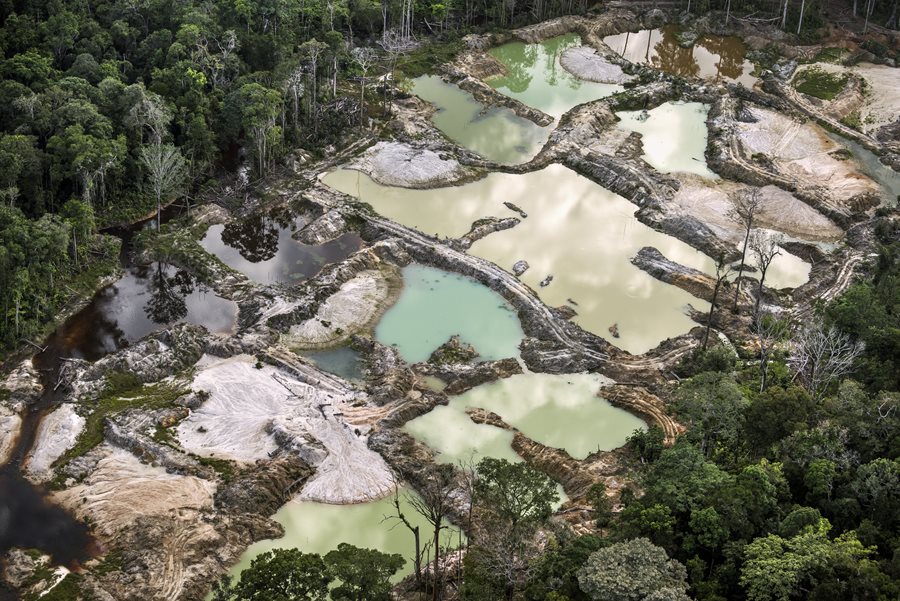
Amazon: Paradise Threatened by Daniel Beltrá
An illegal gold mine, about 160 kilometers north of Macapá, Amapá, Brazilian Amazon. Mercury, a poisonous byproduct of gold extraction, pollutes local water and is found in dangerous levels in fish hundreds of kilometers from the source. 20 January 2017. © Daniel Beltrá
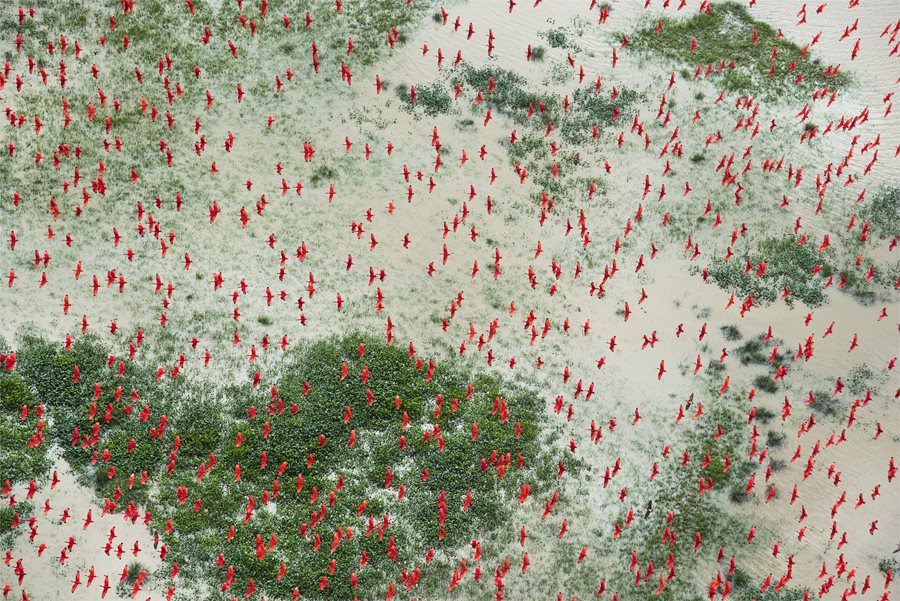
The Amazon is one of Earth's great 'carbon sinks', absorbing billions of tons of CO2 annually and acting as a climate regulator. The rainforest stores the equivalent of two years of global emissions. Deforestation in the Brazilian Amazon surged in 2016, driven by logging, mining, agriculture, and hydropower developments. In 2024, after a change in government, Brazil's National Institute for Space Research reported that the rate fell by 30.6% to its lowest level in nine years. However, scientists warn that climate change, severe droughts, and human activity are reducing the rainforest’s capacity to absorb carbon.
Scarlet ibises fly above flooded lowlands, near Bom Amigo, Amapá, Brazilian Amazon, on 5 February 2017. © Daniel Beltrá
Mongolia, Black Gold Hotel by Michelle Palazzi
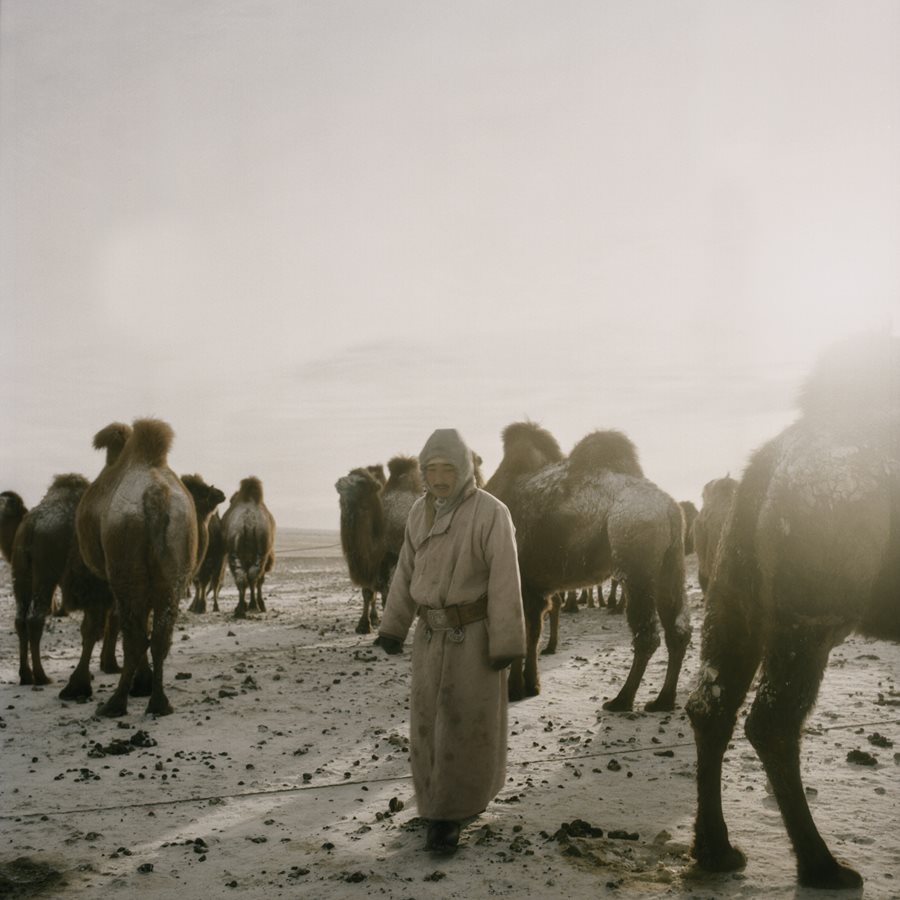
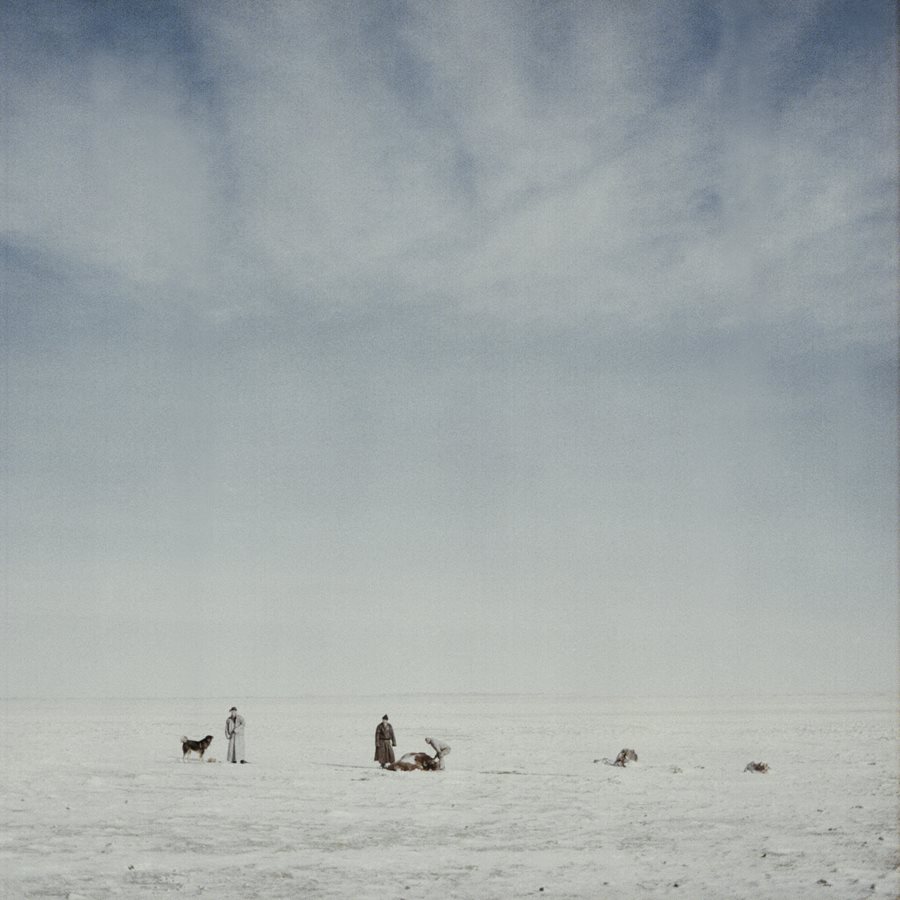
Left: Tuvshinbayar tends to camels, before nightfall on 10 January 2013. Nomadic families rely heavily on camels for transport and food. Right: The province of Ömnögovi, in southern Mongolia’s fragile Gobi Desert, is rich in deposits of copper and gold. Mining consumes vast energy and scarce water, strips vegetation, and accelerates desertification, weakening the land’s natural capacity to store carbon. 12 January 2013. © Michelle Palazzi
Mongolia's economy heavily relies on its mining sector. The traditional nomadic herding lifestyle is under pressure from mining expansion and climate change, prompting many to seek work in urban centers. Over the past 80 years, Mongolia's average temperature has risen by 2.25°C, nearly triple the global average, intensifying droughts and desertification, and leaving herders with fewer rivers and streams for their livestock. Those who continue herding must also cope with pollution, deforestation, and overgrazed pastures. As grasslands turn to dust and water sources dwindle, the survival of Mongolia's nomads grows uncertain.
Alpaqueros by Alessandro Cinque
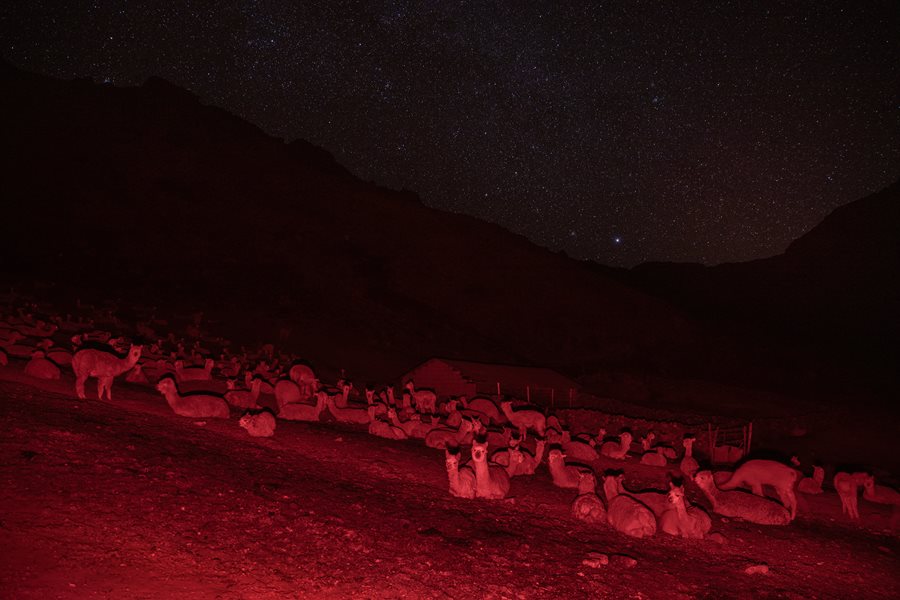
Alpacas rest outdoors at night in Oropesa, Peru, on 2 May 2021. Many alpaqueros (alpaca-farmers) cannot afford to build shelters for their animals, despite freezing temperatures at high altitudes. © Alessandro Cinque
Vital to the livelihoods of many people in the Peruvian Andes, alpacas face new challenges due to the climate crisis. These camelids are embedded in Indigenous cultural life and provide thousands of families with essential income from their fine fiber (wool). Shorter rainy seasons, longer droughts, and declining glacial meltwater threaten both animals and communities, forcing alpaca farmers to higher altitudes or to abandon traditional lifestyles. Scientists hope to use biotechnology to create temperature-resistant alpaca breeds able to survive harsh nights at higher elevations and thrive in warmer lowlands where new diseases emerge.
Standing Rock by Amber Bracken
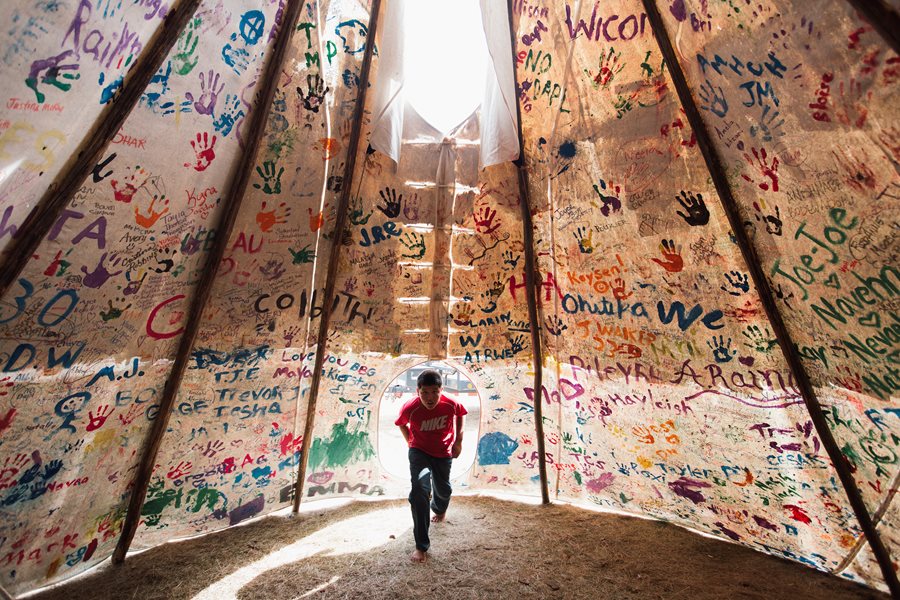
Jesse Jaso enters the Unity Teepee, at the Sacred Stone camp in Cannon Ball, North Dakota, USA, on 11 September 2016. Supporters from around the world opposing the Dakota Access Pipeline had signed the teepee. © Amber Bracken
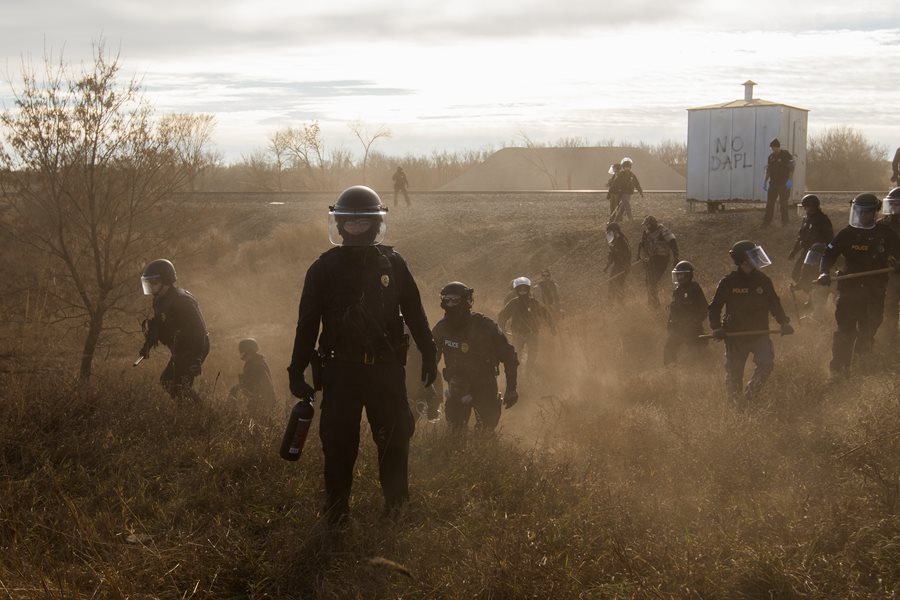
The Dakota Access Pipeline (DAPL) transports crude oil 1,886 kilometers from North Dakota to Illinois, USA. In 2016, the Standing Rock Sioux Tribe led protests against its planned route under Lake Oahe and the Missouri River, fearing water contamination and damage to sacred sites. Despite a temporary halt in construction and prolonged opposition, the pipeline began operating in 2017. In 2024, the tribe filed a new lawsuit, arguing that the DAPL operates illegally without proper permits, violating tribal sovereignty, endangering cultural sites and water supplies, and ignoring broader climate consequences.
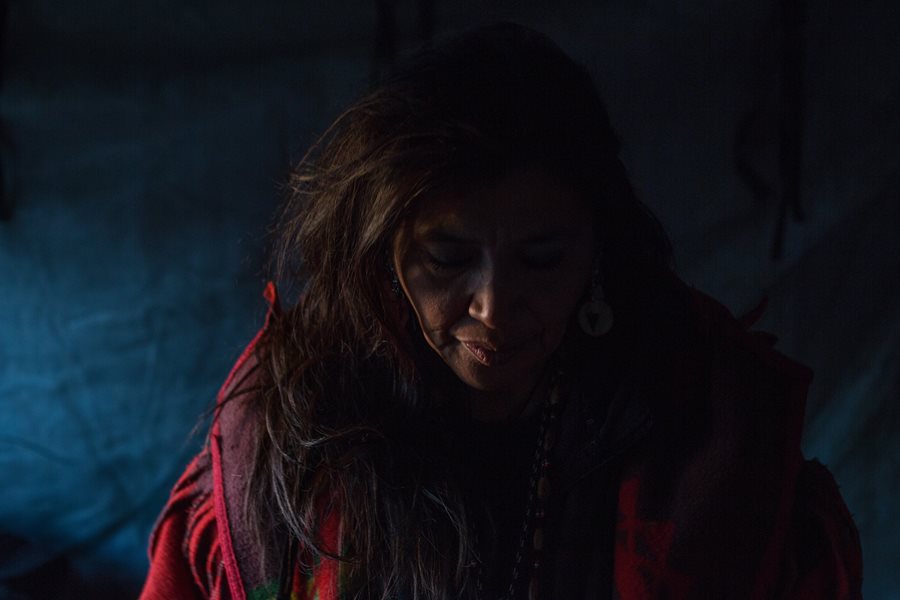
Left: Vonda Long, a descendant of High Hawk, who was killed in the 1890 Wounded Knee Massacre, says she has been fighting for justice her whole life. North Dakota, USA. 13 November 2016. Right: Riot police clear marchers from outside a Dakota Access Pipeline worker camp. They were drawing attention to violence against Native American women, exacerbated by the presence of mostly male work crews. 15 November 2016. © Amber Bracken
Battered Waters by Anush Babajanyan
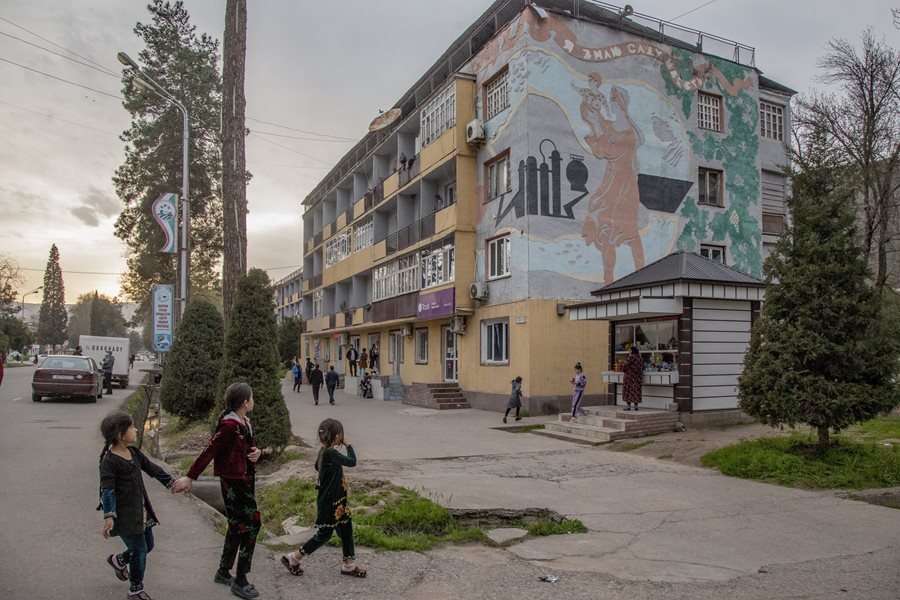
Girls cross a street in Norak, Tajikistan, on 21 March 2022, in front of a mural depicting the Vakhsh River and Norak Dam, one of the world’s highest. The artwork celebrates the Norak Hydroelectric Station, which provides 70% of Tajikistan's electricity. © Anush Babajanyan
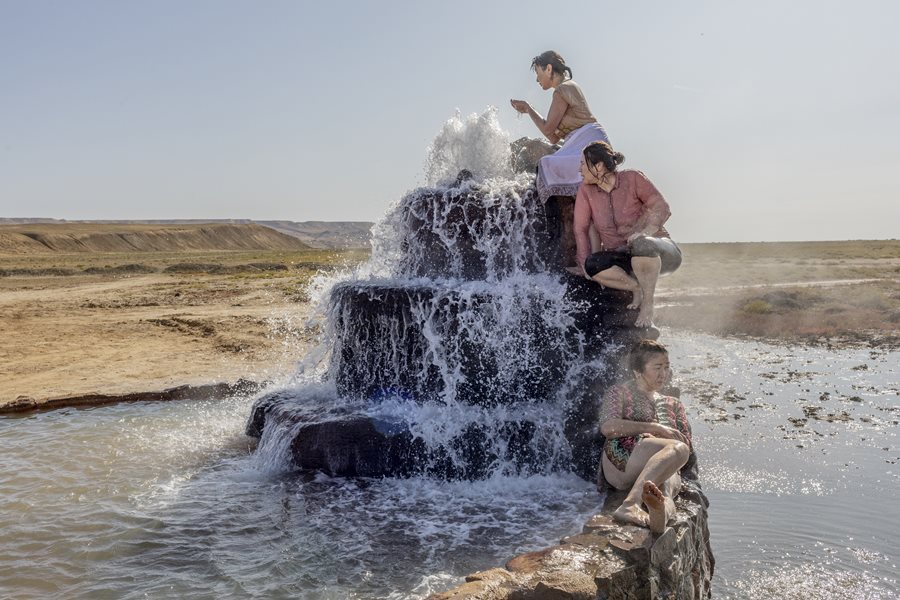
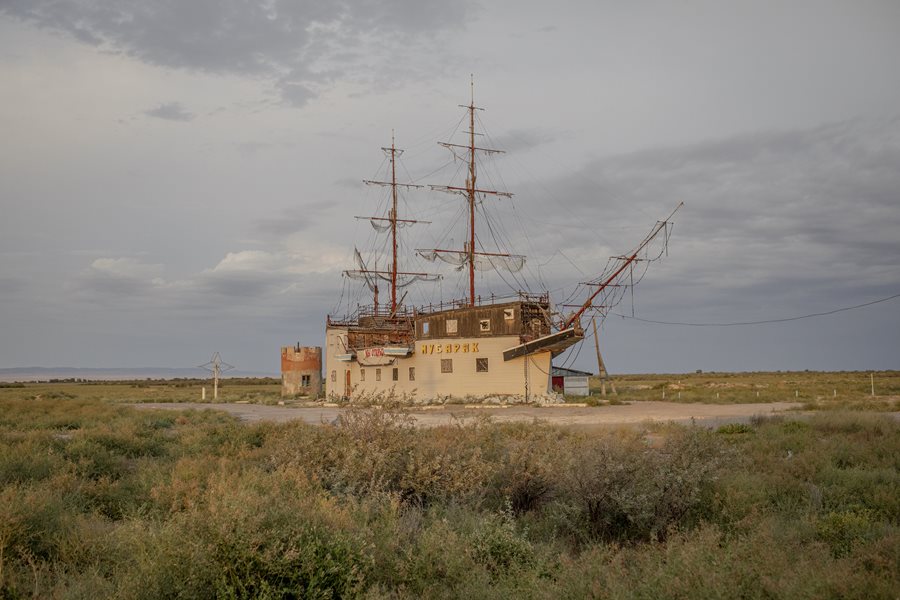
Access to water is one of the most contentious local issues in Central Asia today. Four landlocked countries compete for shared resources from the Syr Darya and Amu Darya rivers – a situation intensified by the climate crisis. Recent droughts have aggravated tensions between upstream Tajikistan and Kyrgyzstan and downstream Uzbekistan and Kazakhstan. By 2022, Kyrgyzstan's critical Toktogul Reservoir held just 8.6 billion cubic meters – well below its 19.5 billion capacity. Furthermore, glaciers in Kyrgyzstan and Tajikistan are receding. While this temporarily increases water flow, it can also cause flooding, and threatens long-term supplies.
Left: Women visit a hot spring that has emerged from the dried bed of the Aral Sea, near Akespe village, Kazakhstan, on 27 August 2019. Right: An abandoned restaurant, which locals call the Titanic, stands near Lake Balkhash, in Kazakhstan, on 23 August 2019. © Anush Babajanyan