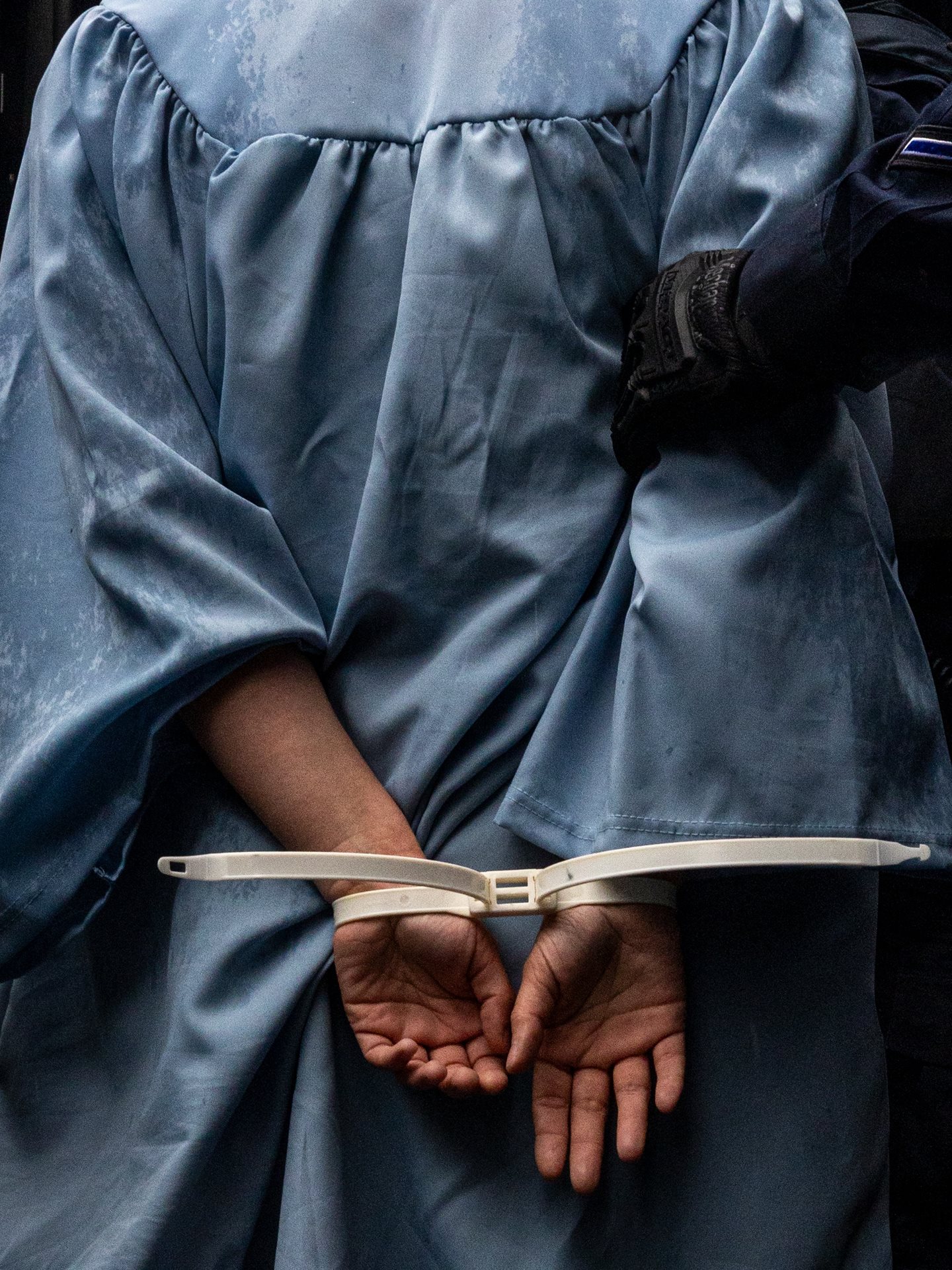


Barnard College alumna Jesse Pearce is arrested outside Columbia University’s 2025 commencement ceremony in New York City, New York, United States. Alumni and students gathered to protest the institution’s financial ties to Israel and the University administration’s bowing to federal pressure to crack down on campus demonstrations.
In 2025, US higher education institutions became battlegrounds for a national conflict over free speech, institutional independence, and international policy. Columbia University was one of the focal points in this struggle when, in March 2025, the Trump administration suspended approximately $400 million in federal funding. The administration made the restoration of these funds, critical for the university’s research and operations, dependent upon the institution tightening restrictions on campus demonstrations and taking a harder line against pro-Palestine protests.
Facing the immediate disruption of federally funded research, and the threat of general financial instability, Columbia’s trustees gave in to a series of federal demands in a bid to restore the funding. These measures included making student disciplinary processes more strict, banning face masks on campus, and placing several academic departments under review to ensure “comprehensive and balanced” educational offerings. Critics and faculty organizations decried the settlement as an intrusion into academic autonomy, arguing that it set a dangerous precedent for government control over university curricula and policy. Interim Columbia University President Katrina Armstrong stood down in protest of the agreement, marking one of five presidential transitions the institution faced between 2023 and 2026.
Despite these institutional shifts, the graduating class of 2025 and a dedicated network of alumni continued to exercise their First Amendment rights of free speech and peaceful protest. The protests culminated during the university’s commencement ceremonies in May, where demonstrators focused on Columbia’s ongoing financial ties to Israel and the perceived erosion of campus civil liberties. For many, the demonstrations represented a refusal to allow institutional neutrality or federal pressure to silence student-led advocacy.
In a time when independent photojournalism is increasingly vulnerable, donations from people like you give us the ability to work globally with photographers who believe in the power of photography to inspire change. Support World Press Photo today.