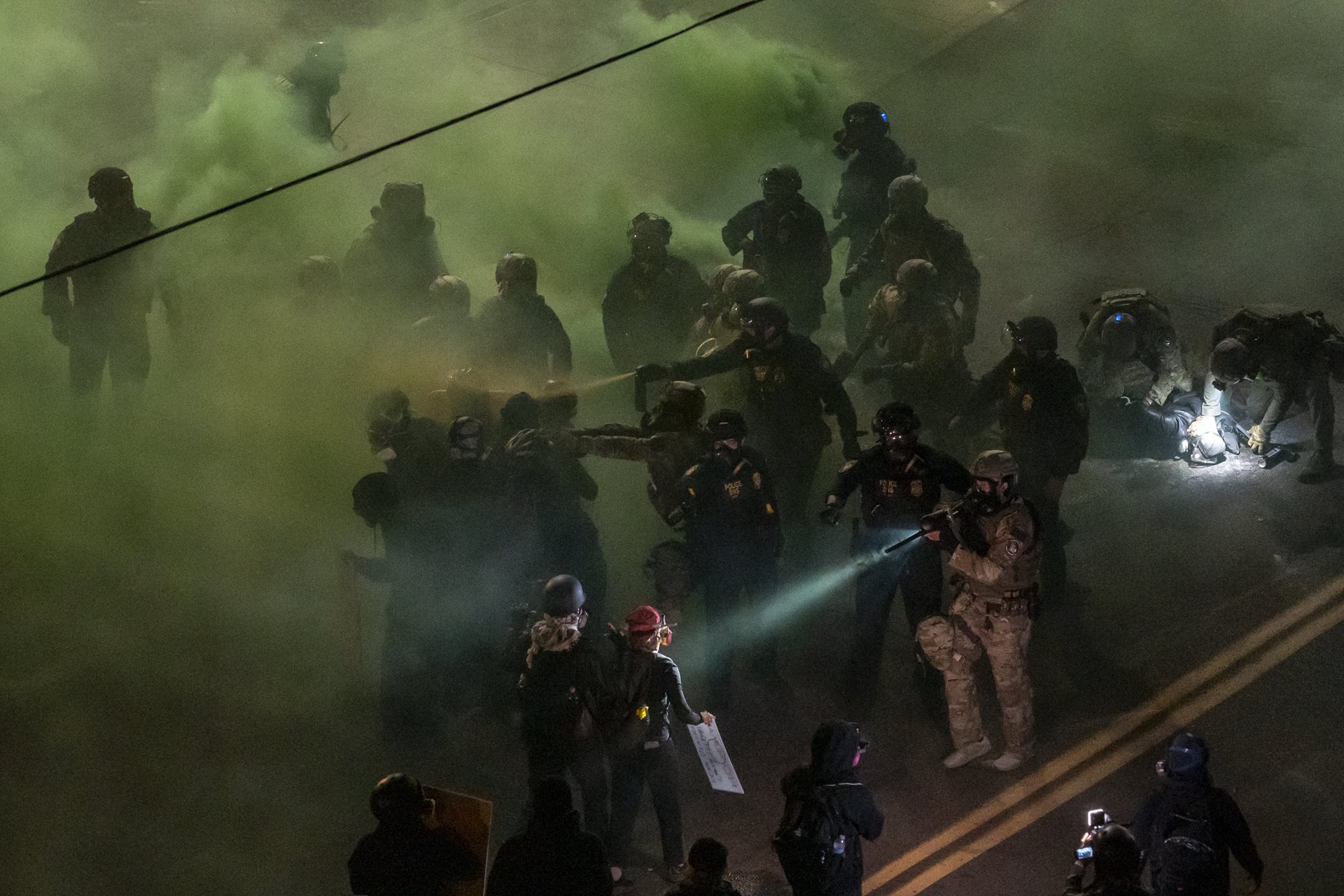


Officers from the Department of Homeland Security and federal tactical units clash with demonstrators during a nightly standoff at a Portland ICE facility in Oregon, United States. These intense protests centered on opposing the administration’s escalating mass-deportation agenda and its shift toward interior enforcement.
In 2025, a fundamental shift in United States immigration policy moved the focus of enforcement from the southern border to the country’s interior. Under a new executive mandate, federal agencies were directed to meet a quota of 3,000 arrests per day, a surge that effectively dismantled “sensitive location” protections; guidelines that had shielded schools, hospitals, courthouses, and places of worship from enforcement actions for decades. The abandonment of these protections signaled a transition toward a comprehensive, mass-deportation agenda.
This federal escalation met immediate resistance in “sanctuary cities” like Portland, Oregon. Under state law, Portland’s local and state law enforcement are prohibited from cooperating with federal immigration authorities, creating a legal and physical boundary between city residents and federal agents. In June 2025, during the nationwide “No Kings” demonstrations, the tension between local and federal policies intensified, and Portland became the center for a movement opposing the US government’s agenda.
Portland’s Immigration and Customs Enforcement (ICE) facility was the site of multiple protests characterized by nightly clashes. Protesters deployed barricades and laser pointers, while federal tactical units, including teams from the Department of Homeland Security (DHS) and US Customs and Border Protection, responded with chemical irritants and “crowd control” munitions. These confrontations represented a profound constitutional struggle between regional autonomy and the expansive powers of federal immigration enforcement. As pressure to meet the administration’s arrest quotas intensified, the streets of Portland became a testing ground for acts of civil disobedience against the reach of national power in the US today.
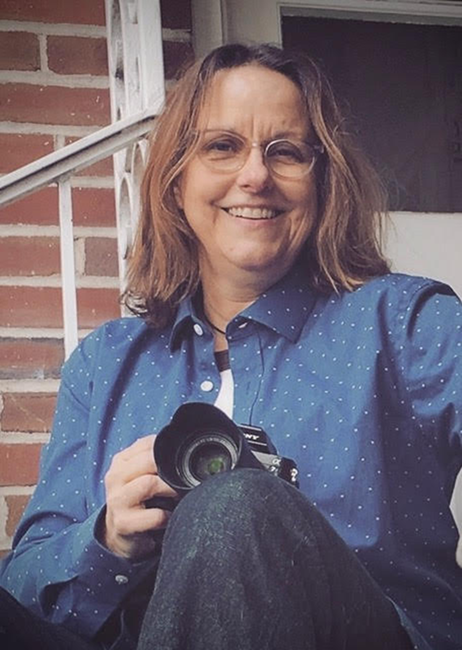
The photographer took the images from the balcony of an apartment directly adjacent to the ICE building. The residents suffered for months in 2025, with tear gas entering their windows, multiple stun grenade explosions, and loud fighting lasting into the night.
Behind every powerful image is a story someone chose to tell. And often, a risk someone chose to take. Support World Press Photo by making a donation to ensure these important stories are seen across the globe.