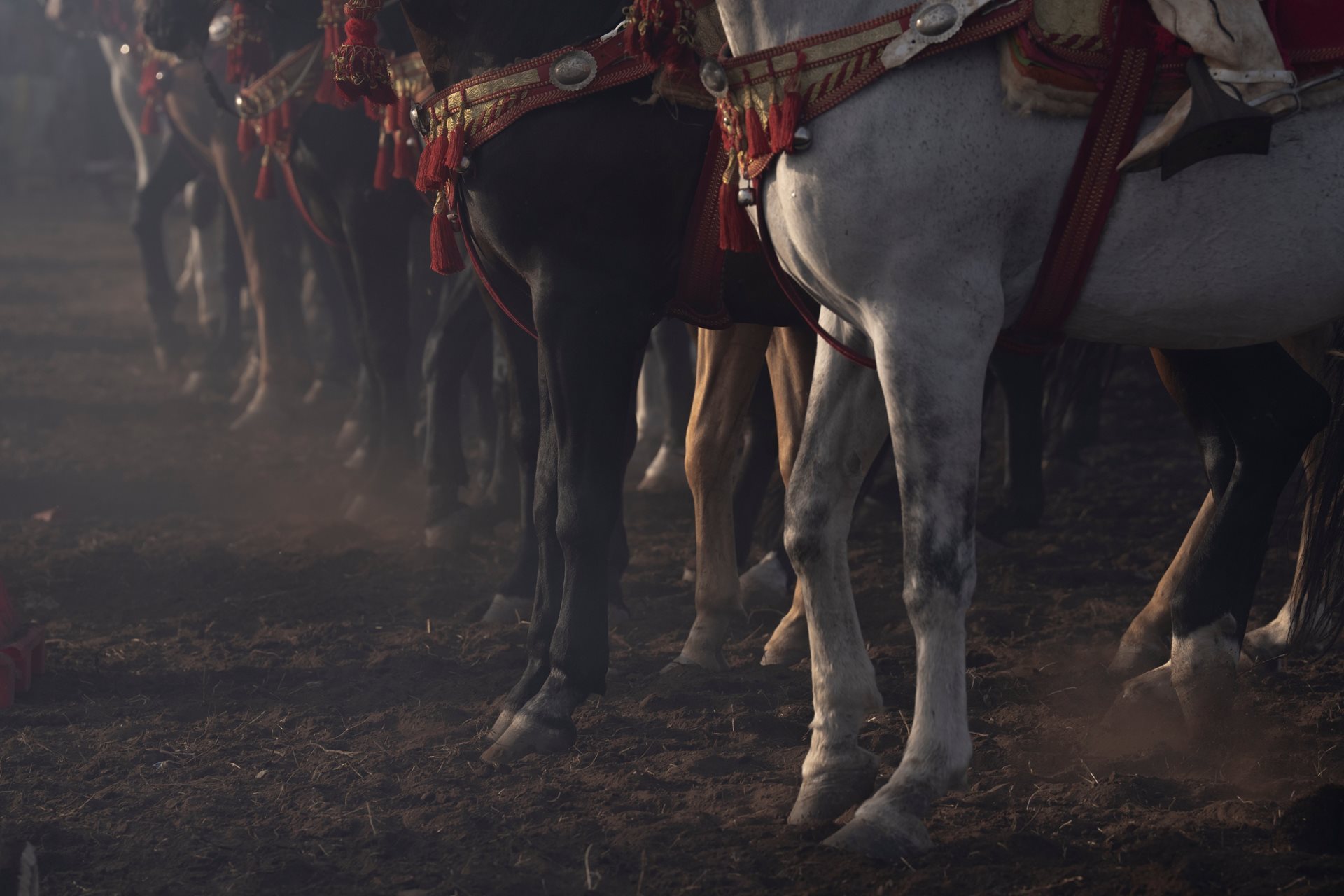


Horses lined up at the start of the arena before the hadda – the opening salute in which riders enter at a trot before repositioning for the main performance. Sidi Rahal, Morocco.
Tbourida is a UNESCO-recognized Moroccan equestrian tradition dating back to the 16th century. Troupes of 15 to 25 riders gallop in unison, firing rifles in a choreographed performance of ancient cavalry military parades. Riders wear period costumes representing their tribe or region and carry a sword and a small copy of the Koran. They often give spiritual significance to the event, performing cleansing rituals and praying collectively beforehand. The tradition passes from generation to generation within families and demands advanced horsemanship, balance, and courage.
For centuries, Tbourida was exclusively male, but female riders have steadily fought for inclusion since Morocco's 2004 family code reforms strengthened women's legal rights. Today, seven all-female troupes ride among approximately 300. These farīsāt (horsewomen) bear significant personal costs, funding their own horses, costumes, and gunpowder permits. Their perseverance is a powerful assertion of women's rightful place within Moroccan cultural heritage.
The photographer, an athlete herself, believes sport reveals the inequalities and exclusions that shape society. Having felt firsthand how empowering it can be, she has focused her work on communities where women face persistent barriers to participation.
Behind every powerful image is a story someone chose to tell. And often, a risk someone chose to take. Support World Press Photo by making a donation to ensure these important stories are seen across the globe.