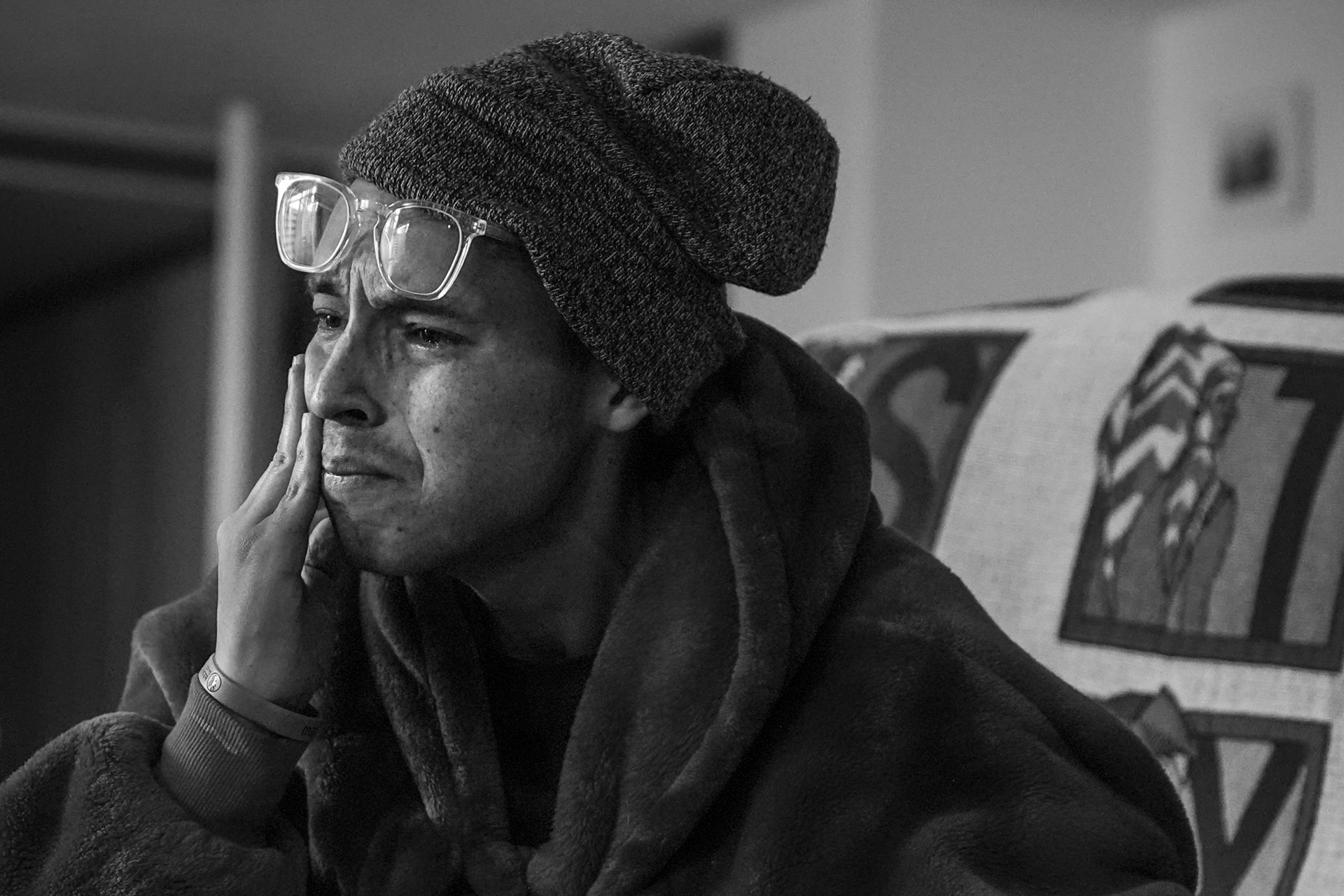


Tanner contemplates his family’s future without him. For young adults, early-onset cancer disrupts a period of life traditionally defined by good health and financial productivity. American Fork, Utah, United States.
In 2020, at the age of 25, Tanner Martin was diagnosed with Stage 4 colorectal cancer. For Tanner and his wife, Shay, the diagnosis transformed their late twenties into a battle against a terminal prognosis. Originally the couple planned to wait for remission to start a family, but in 2023, they received devastating news from his doctors who estimated that Tanner only had two to five years to live. However, a “window of hope” emerged in late 2024 when a new treatment regimen briefly stabilized his condition. Seizing this moment, the couple chose to pursue IVF. This intimate project documents the final months of Tanner’s life, centering on his singular goal: surviving long enough to meet his daughter.
Tanner’s experience humanizes a staggering and poorly understood global health trend. While cancer has traditionally been considered a disease of aging, predominantly affecting those over 65, incidence rates for US adults under 50 have risen steadily since the late 1990s. Research indicates that individuals born in 1990 now face a 200% to 300% increased risk of certain early-onset cancers compared to previous generations. Colorectal cancer, in particular, has shifted to become the leading cause of cancer death in men under 50. Between 2010 and 2019, approximately 200,000 Americans aged 15 to 49 were diagnosed with cancer annually, disrupting a life stage traditionally defined by health and financial productivity.
Tanner’s story culminates in American Fork, Utah, following the birth of the couple’s daughter, AmyLou, on May 15, 2025. Tanner lived for 41 days after her birth, long enough to cradle her and film a father-daughter dance intended for her future wedding. His death at age 30 is one poignant representative of the disturbing rise of early-onset illnesses. Through their social media documentation, the Martins reached millions, providing an intimate look at a young family grappling with terminal illness, profound grief, and the joy of new life.
At no time is the need for accurate information more essential, while at the same time, more difficult to produce. That’s why we all need to support a free press. Make a donation to World Press Photo today to strengthen photojournalism.