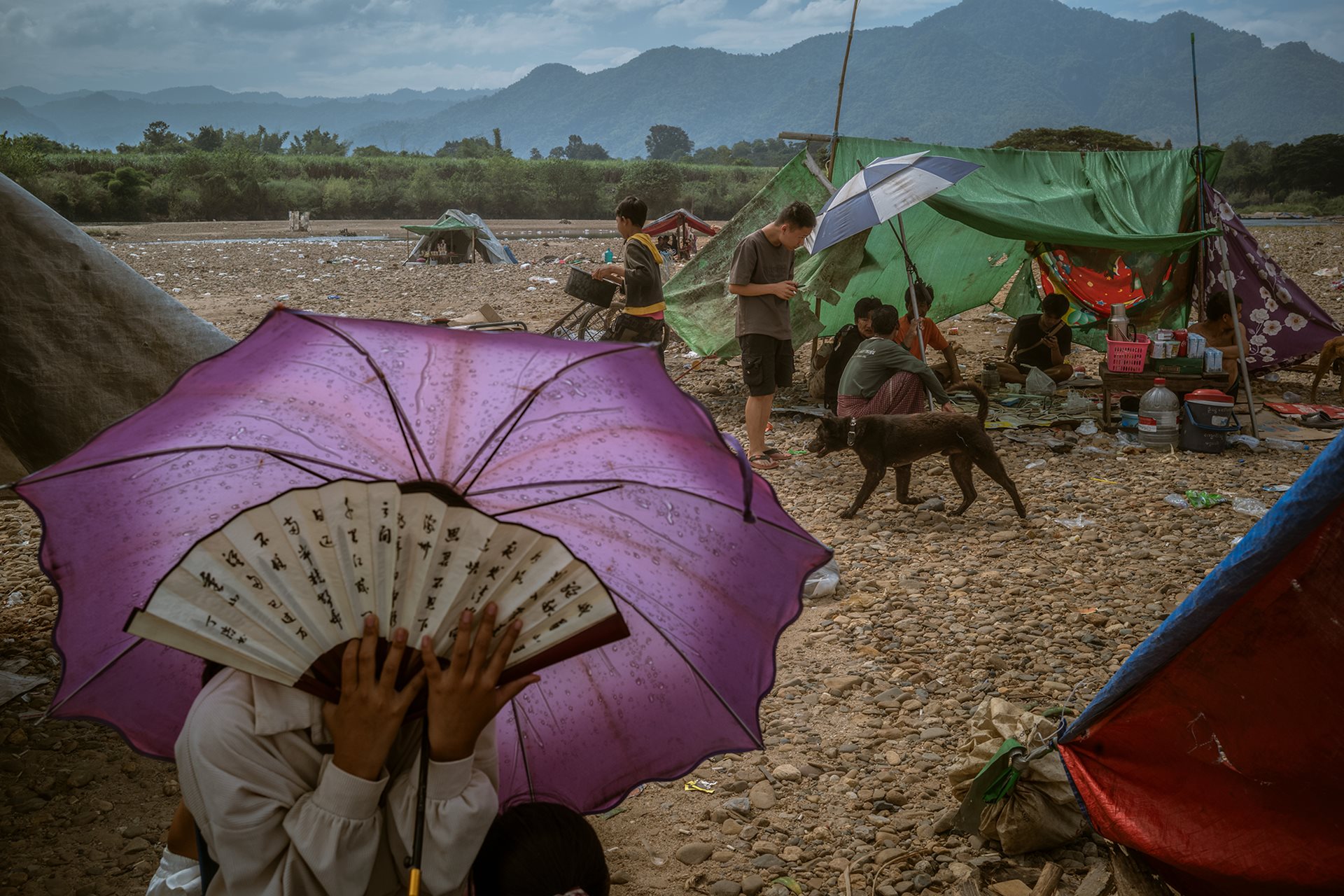


Stranded workers at a makeshift shelter near the Moei River in Min Let Pan, Myanmar. Many workers had their documents and passports seized by the scam center bosses and could not cross the border into Thailand.
On 21 November 2025, the Karen National Liberation Army (KNLA) captured Shunda Park, a non-descript office compound in Myanmar’s Karen State, exposing a massive and secretive cyber-scamming operation. As the country’s civil war intensifies, lawless border regions have become hubs for a lucrative online scam industry. This sector, which the United Nations estimates generates approximately $64 billion in annual profit, has transformed the Mekong sub-region into an engine of both criminal wealth and human suffering.
Inside Shunda Park, over 3,500 workers from nearly 30 nations, including Russia, France, and Zimbabwe, spent their days "role-playing" as romantic interests or crypto-investors to defraud victims worldwide. While some employees were salaried professionals, many were victims of human trafficking who were lured into such operations through deceptive job ads. Once inside, their passports were confiscated and they were forced to work under inhumane conditions, subject to systemic wage theft, torture, and isolation.
The fall of Shunda Park caused a complex humanitarian crisis. As rebel forces took control, the Myanmar junta shelled the complex, determined to reclaim a site that had long enjoyed the protection of military-allied warlords. The “liberation” left thousands of workers stranded in a geopolitical limbo. Many lacked the documentation to cross into Thailand, while approximately 900 Chinese nationals refused to leave the immediate area, fearing that repatriation to China would result in imprisonment. By documenting the prop-filled offices and the desperate scam center workers now huddled on riverbanks, the photographer has provided a rare look at a frontier where the lines between criminal and victim are blurred.
Behind every powerful image is a story someone chose to tell. And often, a risk someone chose to take. Support World Press Photo by making a donation to ensure these important stories are seen across the globe.