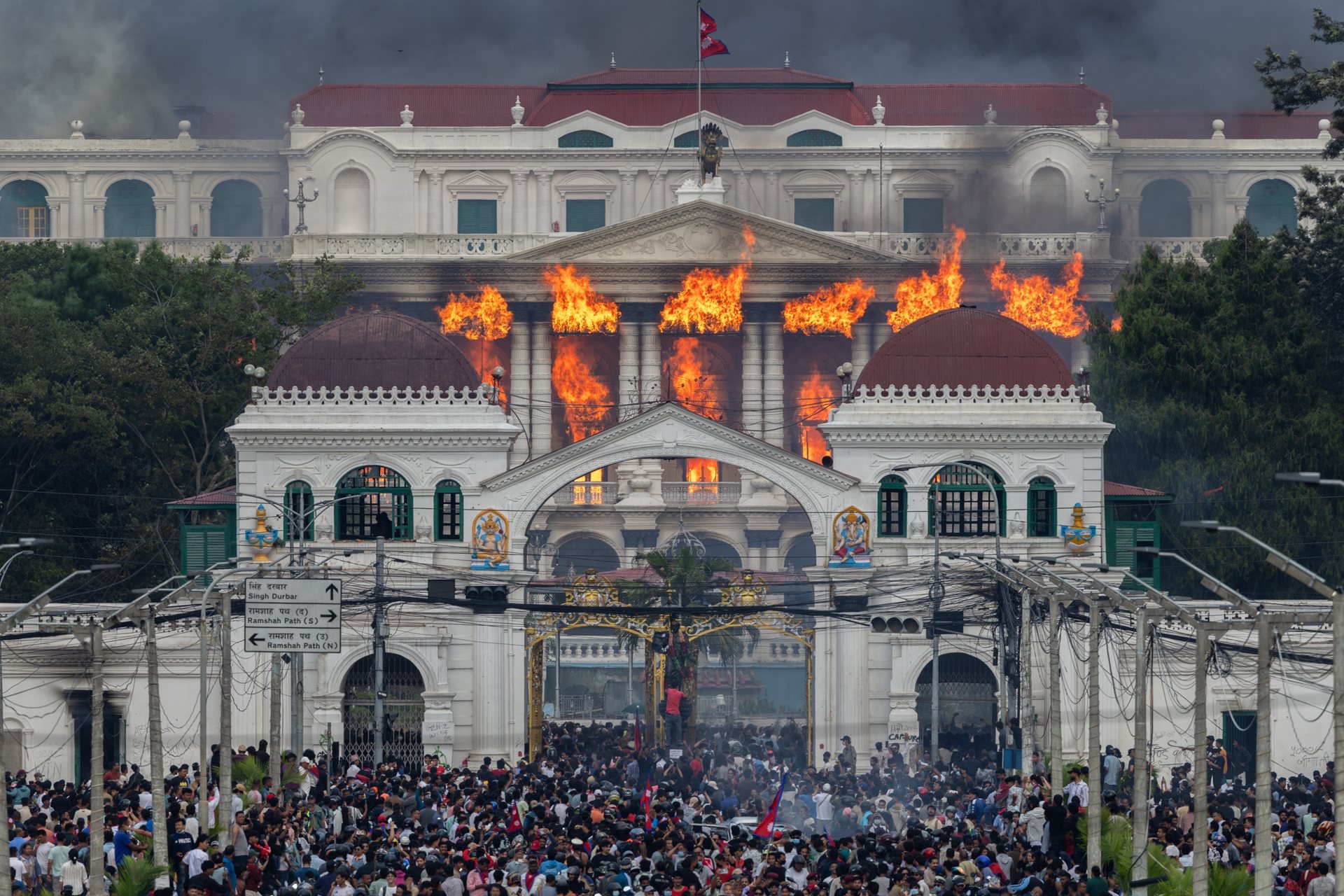


Fire and smoke engulf Singha Durbar after protesters stormed and set the government complex alight during violent demonstrations in Kathmandu, Nepal.
For years, successive Nepali governments had been accused of corruption and institutional failure. With youth unemployment above 20% and more than 1,500 leaving the country every day in search of work, young Nepalis had lost faith in politicians to deliver change. A government ban of 26 social media platforms on 4 September 2025 was the breaking point.
On 8 September, thousands took to the streets, part of a generation of young people around the world refusing to accept systems that perpetuate corruption, unemployment, and economic hardship. Within two days, 76 people were dead, most of them young demonstrators killed by police. Thousands more were injured. On 9 September, following Prime Minister KP Sharma Oli’s resignation, protesters stormed and set fire to Singha Durbar, the historic complex at the heart of Nepal’s government.
In the aftermath, protest leaders consulted with the military to appoint Sushila Karki as interim Prime Minister. Karki was Nepal’s first female head of government, with a reputation for integrity in cases involving corruption and constitutional law. Elections were called for March 2026. On 5 March, the Rastriya Swatantra Party (RSP), with Balendra Shah – a 35-year-old engineer turned rapper turned Kathmandu’s first independent mayor – as its prime ministerial candidate, won a sweeping parliamentary majority. Shah’s music had long spoken to the same grievances that drove the protests; his song Nepal Haseko (Nepal Smiling) accumulated more than 10 million YouTube views during the unrest. In a country where over 40% of the population is under 35 but political leaders have remained in their 70s for decades, his victory marked a generational shift.
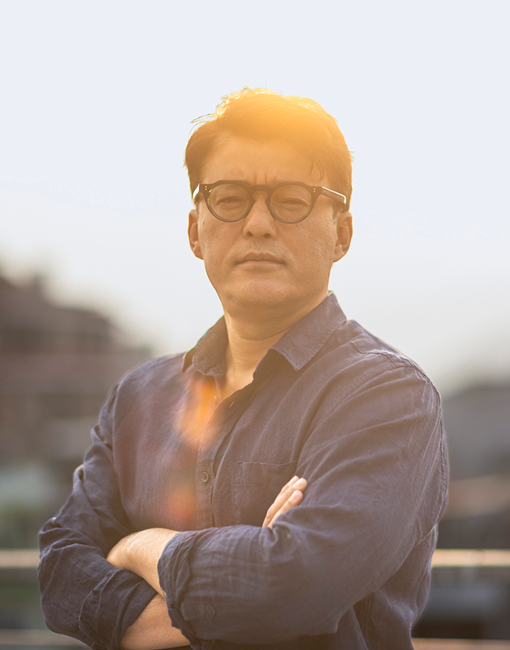
Born and based in Nepal, the photographer has spent over two decades documenting the country’s social and political movements. His long-term engagement with communities and activists in Kathmandu gave him the access and trust needed to cover the protests safely and authentically.
Behind every powerful image is a story someone chose to tell. And often, a risk someone chose to take. Support World Press Photo by making a donation to ensure these important stories are seen across the globe.