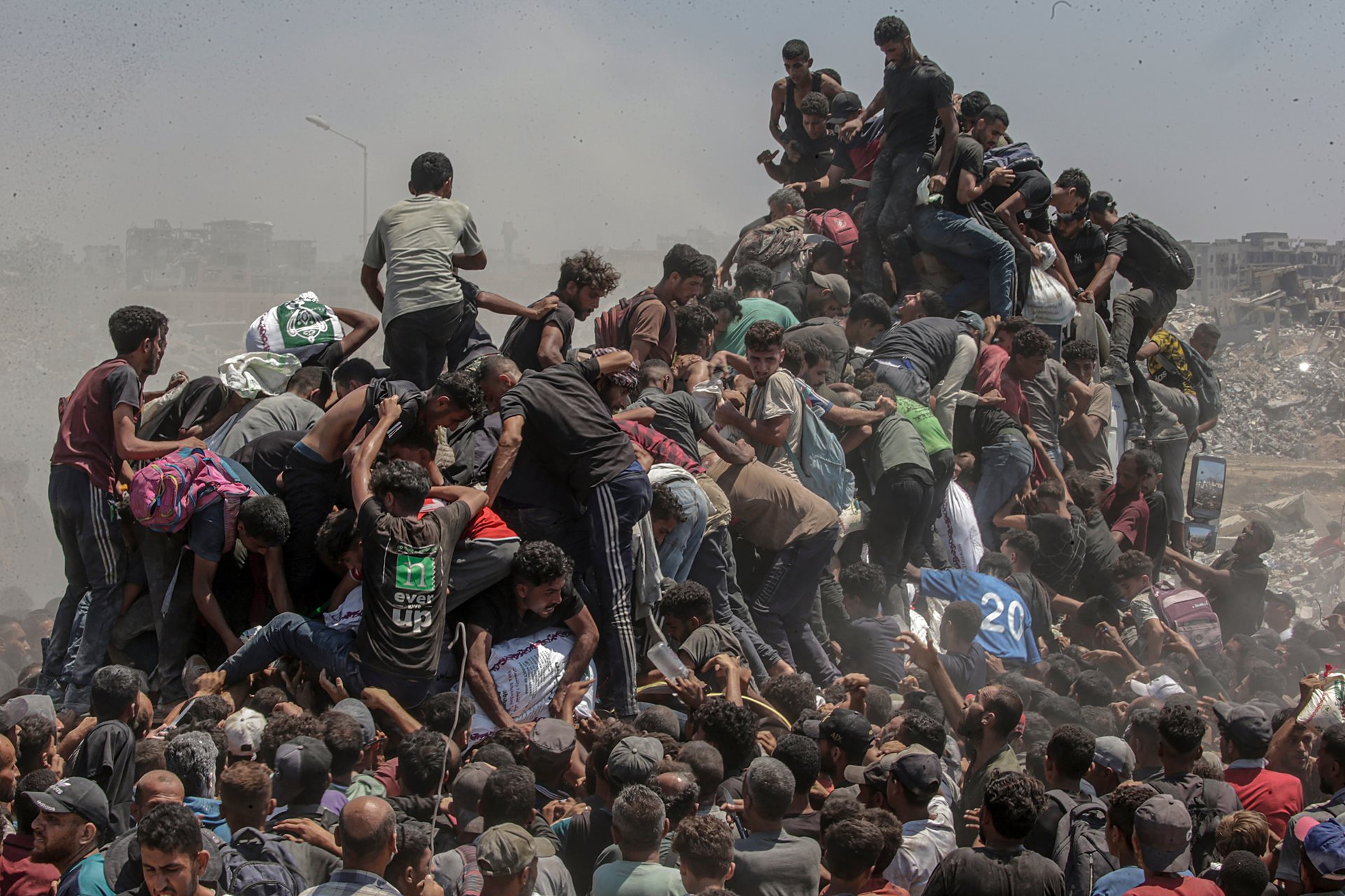


Palestinians climb onto an aid truck as it enters the Gaza Strip via the Zikim Crossing in an attempt to get flour, during what the Israeli military called a “tactical suspension” in operations to allow humanitarian aid through.
In 2025, famine took hold amid what an independent UN Human Rights Commission inquiry has concluded is a genocide in Gaza. Israel disputes this.
Israeli authorities imposed a complete aid blockade in March, a tactic described by humanitarian organizations as the weaponization of starvation. When international pressure led to a partial reopening of crossings in May, most deliveries went through the Gaza Humanitarian Foundation (GHF), established by the US and Israel to bypass the UN-led aid system. Its operation, which put military personnel in charge, was widely condemned by global human rights and legal organizations as unethical and in violation of international law. The UN reports that between late May and early October, at least 2,435 Palestinians were killed seeking food at or near GHF collection points.
The GHF shut down when a fragile ceasefire went into effect in October. Despite some aid entering Gaza, more than 75% of the population still faced hunger and malnutrition in December. The photographer was born in Gaza and has documented life there since 1997.
In a time when independent photojournalism is increasingly vulnerable, donations from people like you give us the ability to work globally with photographers who believe in the power of photography to inspire change. Support World Press Photo today.