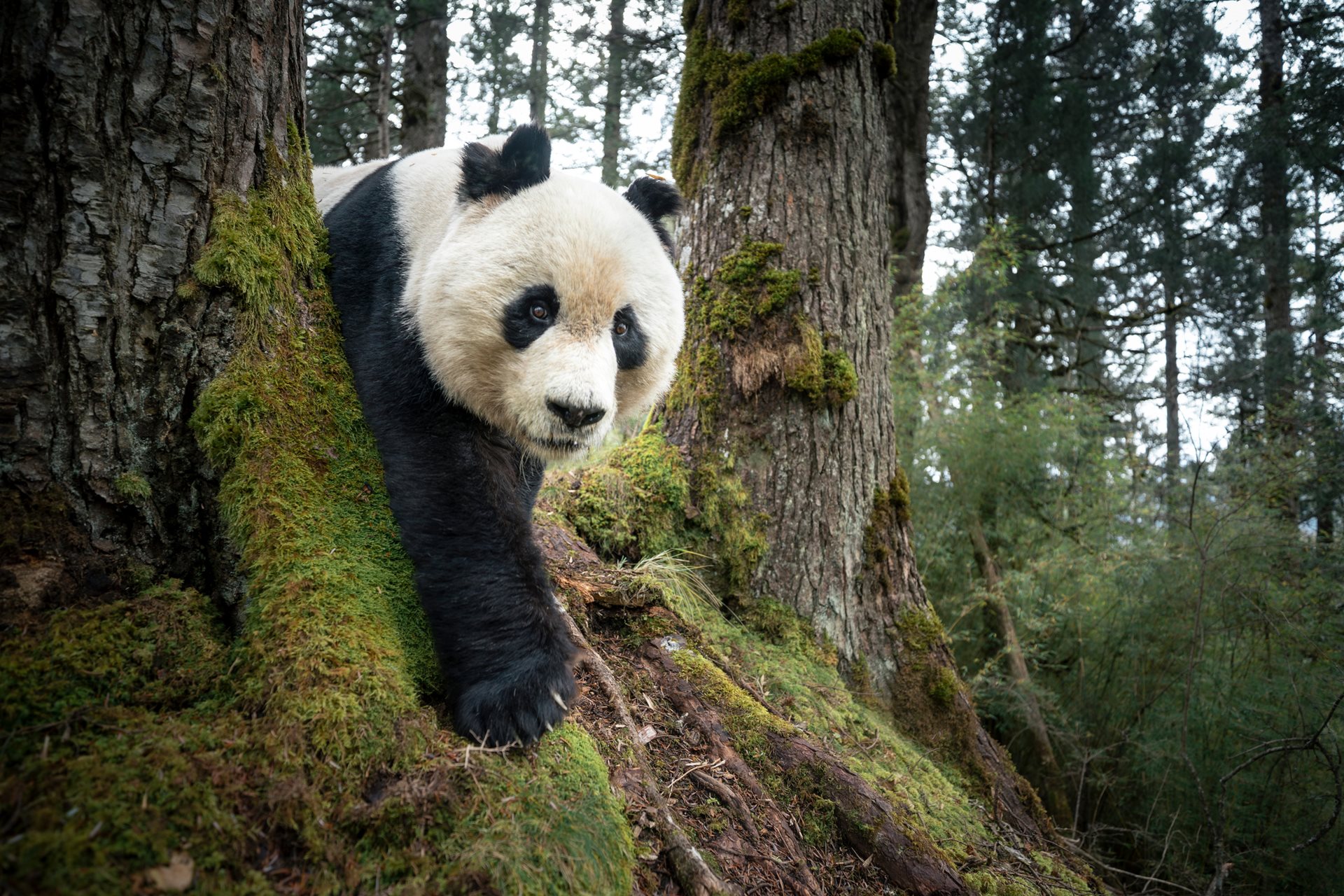


A wild giant panda is captured by a camera trap in the Wanglang National Nature Reserve in Sichuan, China. This image serves as vital proof of the species’ continued presence in one of China’s most critical conservation areas.
Recent population estimates suggest that fewer than 2,000 pandas remain in the wild, and only a few dozen individuals live within Wanglang National Nature Reserve’s 323-square-kilometer territory. While the captive population has grown to over 700, catching a glimpse of a wild panda in this remote, densely forested mountain range is a truly special occurrence.
This rare sighting was made possible through the National Geographic Society’s US-China Parks Exchange, a 2025 pilot program supported by the Henry Luce Foundation. The initiative paired two American and two Chinese photographers to work across each other’s most iconic landscapes—from Glacier National Park in Montana to the Min Mountains of Sichuan. Aimed at fostering cross-cultural cooperation, the project demonstrated how a shared duty toward the natural world can transcend political and geographic boundaries. The resulting image is not merely a product of technology, but of years of relationship-building between photographers and local rangers.
Established in 1965, Wanglang is one of China’s oldest wild panda nature reserves and today serves as a key site for education and scientific research collaboration within the larger Giant Panda National Park system. The reserve protects the headwaters of the northern tributaries of the Yangtze River, the world’s third longest river and a vital resource for over 400 million people. Because wild pandas are notoriously elusive, documenting them required using custom-built, weather-sealed camera traps positioned just off an existing travel corridor to minimize interference with the panda’s natural movement. With its low angle and well-timed framing, the image invites viewers to meet the gaze of a reclusive mountain resident that represents the health and resilience of the high-mountain forests it inhabits.
Behind every powerful image is a story someone chose to tell. And often, a risk someone chose to take. Support World Press Photo by making a donation to ensure these important stories are seen across the globe.