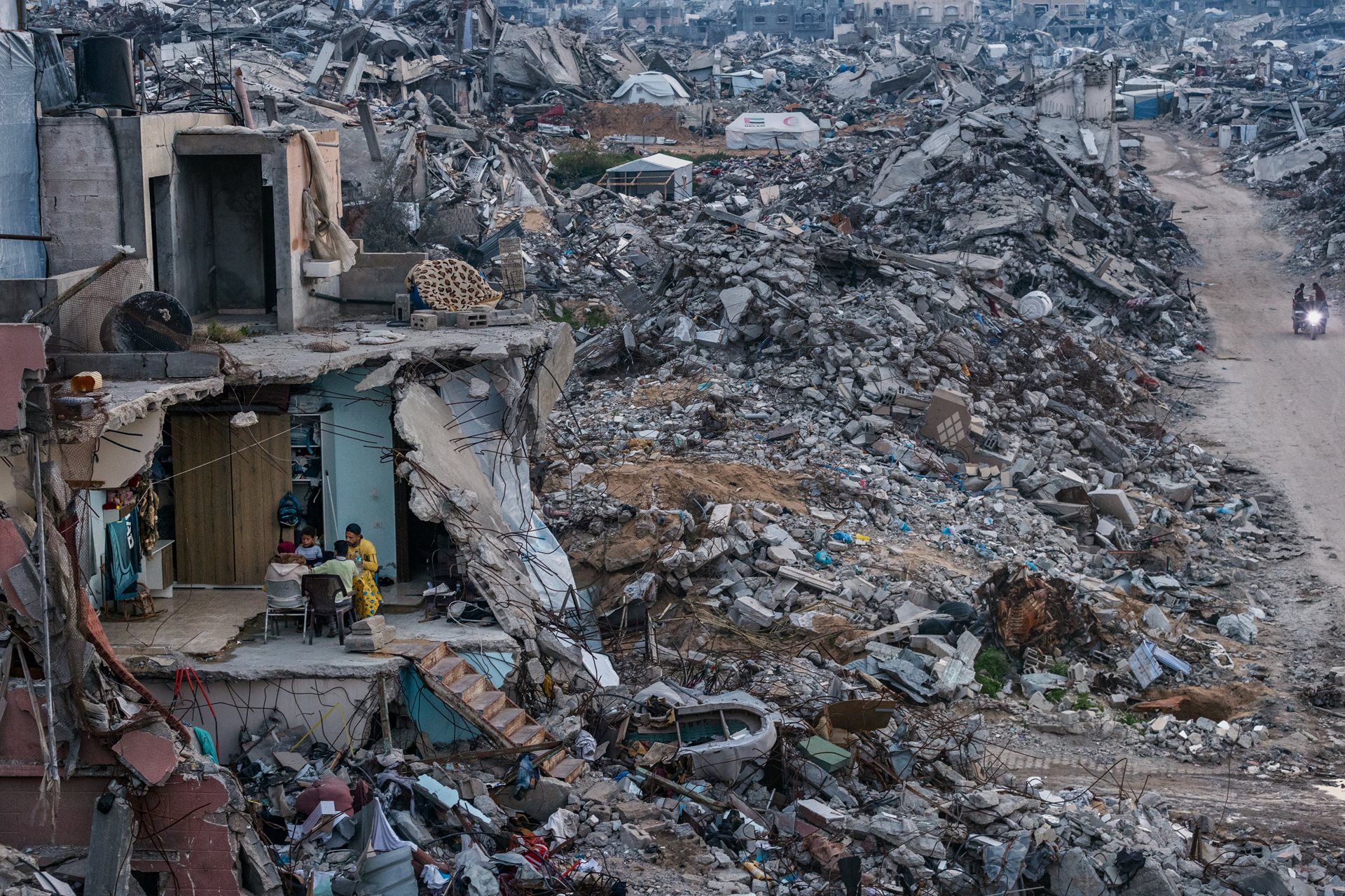


Tamer Hassan al-Shafei and his family break their Ramadan fast in the remains of their home in Beit Lahia, Gaza Strip. Food shortages meant only basics were served instead of the usual spread.
In 2025, civilians in Gaza endured starvation, famine, and relentless bombardment as the death toll surpassed 75,000 people and Israeli authorities severely restricted the flow of humanitarian aid. A fragile ceasefire went into effect in October, allowing some aid to enter Gaza, but Israeli airstrikes continued and the humanitarian situation remains critical.
Palestinian journalists – living through the reality they document – are the world’s few witnesses to what an independent UN Human Rights Commission inquiry has concluded is a genocide. Israel disputes this. At least 94 journalists were killed while carrying out their work across 15 countries in 2025. More than half of those deaths occurred in Palestine, and the Committee to Protect Journalists (CPJ) states that Israel has committed more targeted killings of journalists than any other government’s military since records began in 1992.
This story bears witness to the suffering, resilience, and survival of civilians in Gaza. Photographed across the Gaza Strip between March and October 2025, the work reveals the fear, displacement, famine, and loss experienced daily. The photographer, who continues to report from Gaza, worked under immense danger, driven by a refusal to let the world turn away. “Even when everything around me told me to stop, I couldn’t – silence would mean surrender.”
At no time is the need for accurate information more essential, while at the same time, more difficult to produce. That’s why we all need to support a free press. Make a donation to World Press Photo today to strengthen photojournalism.