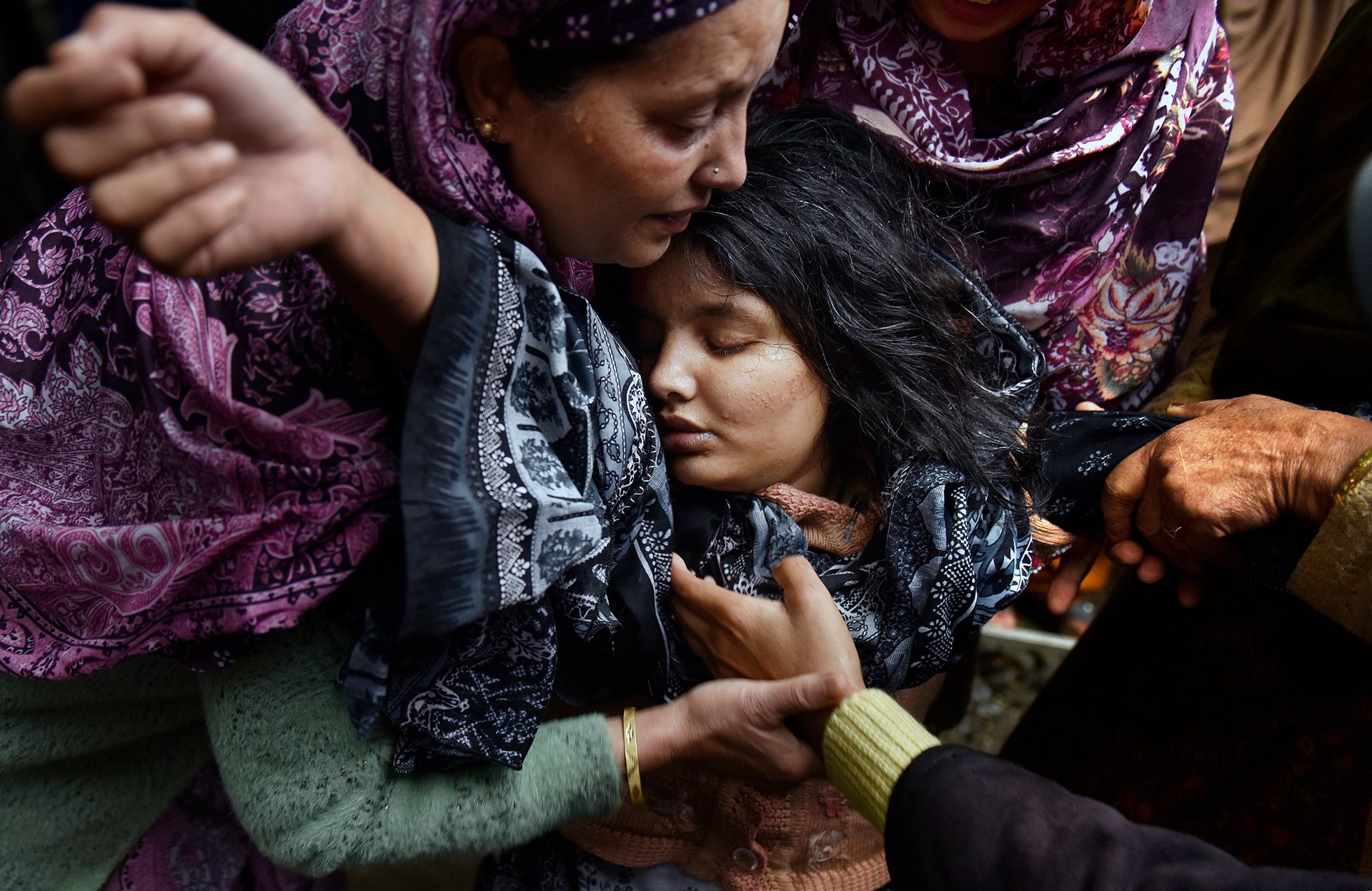


Sanam Bashir (21) collapses with grief at her mother’s funeral. Nargis Begum (45) died from shrapnel wounds after a mortar shell struck while the two were fleeing their home in Uri, Indian-administered Jammu and Kashmir.
The Kashmir region has been contested between India and Pakistan since the 1947 partition of British India. War over the territory broke out that year and a UN-mandated referendum on its status was never held due to disagreements over troop withdrawals and political conditions. The dispute has fueled decades of conflict between the two countries. Today, Kashmir is divided along the Line of Control (the de facto border) between Indian- and Pakistan-administered areas, while China controls parts of the region in the northeast.
On 22 April 2025, gunmen opened fire on tourists in Pahalgam, a town in Indian-administered Jammu and Kashmir, killing 26 people. India blamed Pakistan-backed militant groups and responded with strikes on 7 May, targeting what it described as Pakistan militant infrastructure. Pakistan condemned the strikes as an “unprovoked attack, targeting innocent people” and launched its own military operation in response.
Four days of intense cross-border shelling, drone attacks, and airstrikes followed. Thousands of civilians were displaced, dozens killed, and homes and infrastructure along the Line of Control were destroyed. Widespread international pressure secured a ceasefire on 10 May. Analysts noted that both countries’ nuclear arsenals made de-escalation an urgent global priority.
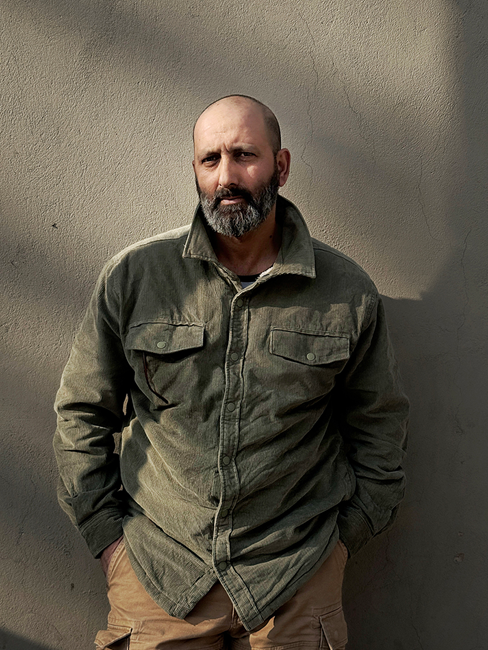
The photographer documented this conflict as a Kashmiri who shares the cultural landscape of his subjects. His image of Sanam Bashir shifts the focus from geopolitics to the people living with its consequences.
At no time is the need for accurate information more essential, while at the same time, more difficult to produce. That’s why we all need to support a free press. Make a donation to World Press Photo today to strengthen photojournalism.