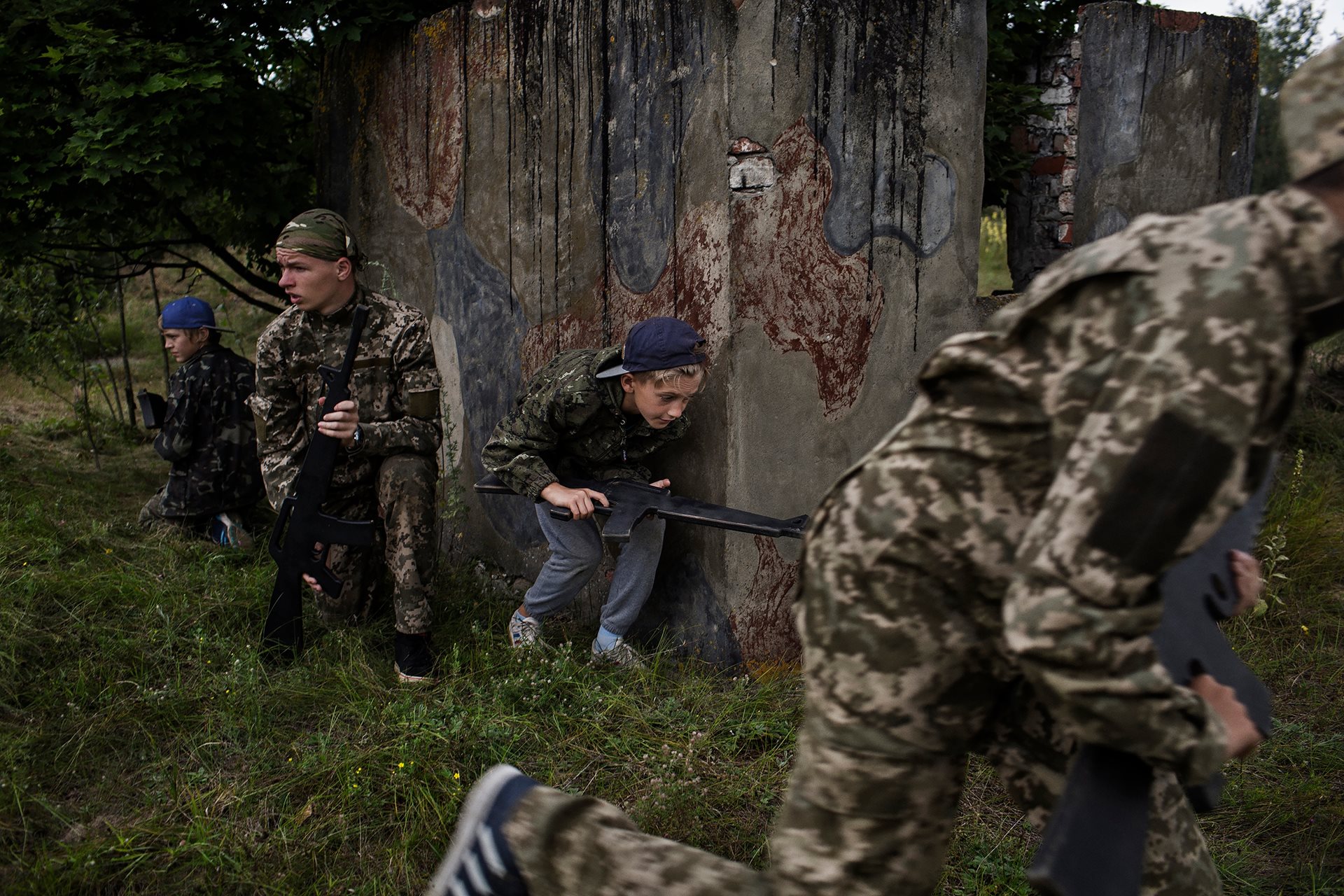


Ukrainian children train in military exercises at Ranger Camp in Volodymyr-Volynskyy, Ukraine, a youth camp for 12- to 17-year-olds founded in 2017.
Across the world, war, extremism, and displacement deny children the right to education. Schools are destroyed, teachers killed or forced to relocate, textbooks burned, and classrooms turned into barracks.
Despite the Safe Schools Declaration, signed by 121 states and aimed at protecting education during armed conflict, attacks on schools, teachers, and students continue to rise. According to a 2025 Save the Children analysis of UN data, there were 2,445 attacks on schools in 2024, nearly three times the 790 recorded in 2020. These attacks included the killing and abduction of teachers and students, airstrikes on schools, the occupation of schools by armed groups, and sexual violence against students within educational facilities.
The UN estimates that 85 million of the 234 million school-age children affected by conflict worldwide have no access to education at all. The consequences extend far beyond the classroom, impacting physical, emotional, social, and cognitive development with lasting effects. The toll on children’s self-esteem, confidence, and sense of security is immeasurable and often invisible. According to the UN agency for children, education breaks cycles of conflict and poverty, and when entire generations miss school, countries lose the human capital needed for recovery. Without intervention, the risk is a “lost generation”: children who grow up knowing only crisis, without the skills or hope to rebuild their societies.
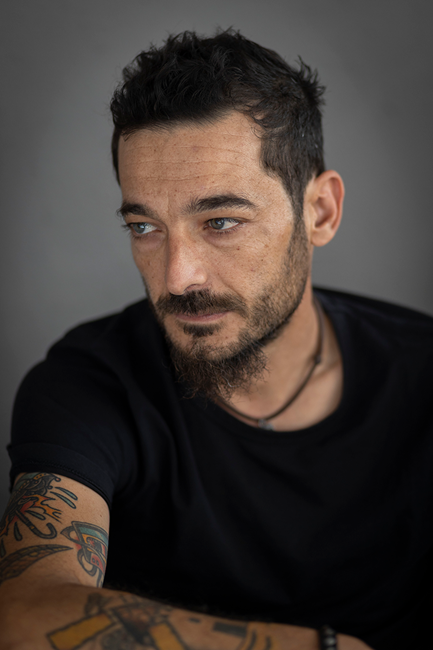
Since 2011, the photographer – son of a teacher and father of an 11-year-old – has documented this reality across nine countries, from Western and South Asia to Europe and South America. His work has taken him from Taliban-controlled classrooms in Pakistan and Afghanistan to bombed schools in Syria, Iraq, Lebanon, and Ukraine, and to displaced communities in Colombia.
The photographs that shape how we see the world don’t appear by chance. They are the result of persistence, courage, and careful work. Support World Press Photo with a donation, so we can continue to be a platform for these stories.